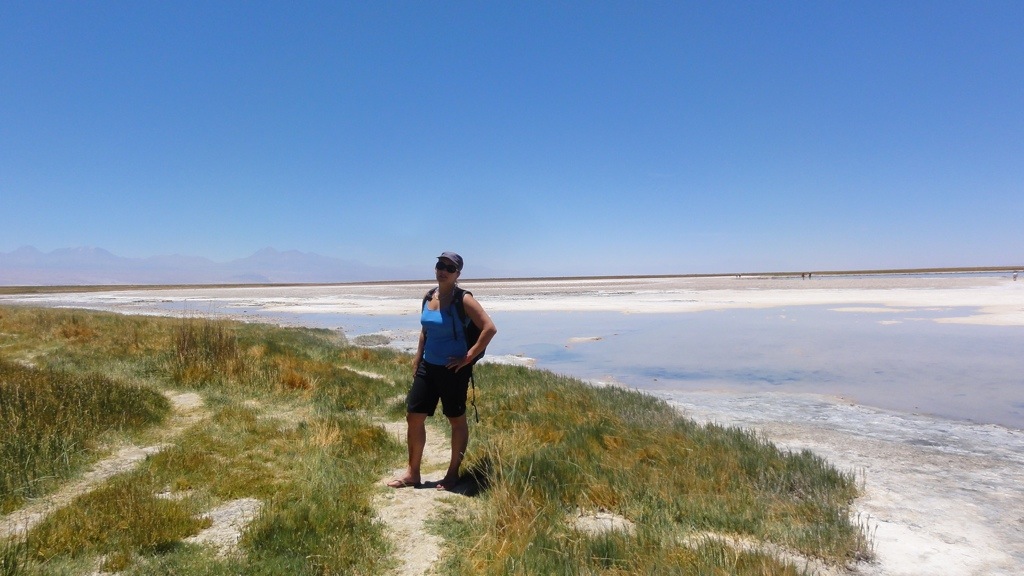
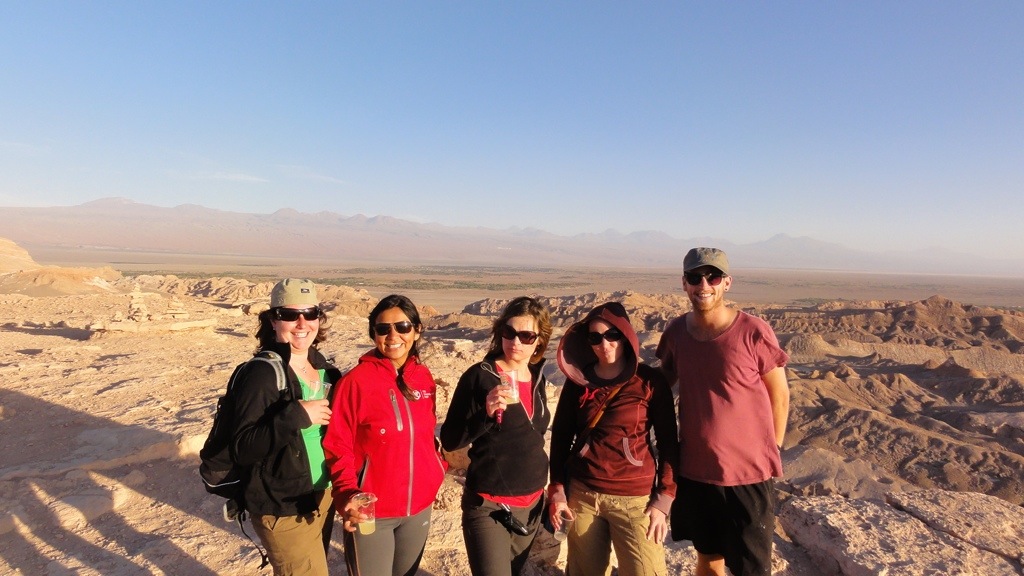
Lagunas, deserts, altitude and so much more!!

This may well be the highlight of my trip so far in terms of what I saw in four days, unbelievable scenery and its going to be hard not to add a hundred photos!!

New Years Eve we left San Pedro at six in the morning, and had a five hour drive to the Bolivian border. It should have only been two, but the border crossing normally used was currently striking. At this point we were all ready at 3500 metres and the air was feeling a bit thinner. The que for the Chilean emigration side took a little while, we then drove with our minibus for five minutes into Bolivia were we met and swapped into our two 4×4 vehicles, plus drivers and a cook for the three day trip. We were pretty lucky as our group size of six meant we needed two vehicles, so we had a lot of room each! After another five minutes we arrived at Bolivian immigration which was extremely quick and painless with zero questions asked! The difference between the Chilean border building and the Bolivian one completely represents the difference in these two countries economic standing, the Bolivian one was like a stone shed with chap sat behind a desk in an open office.

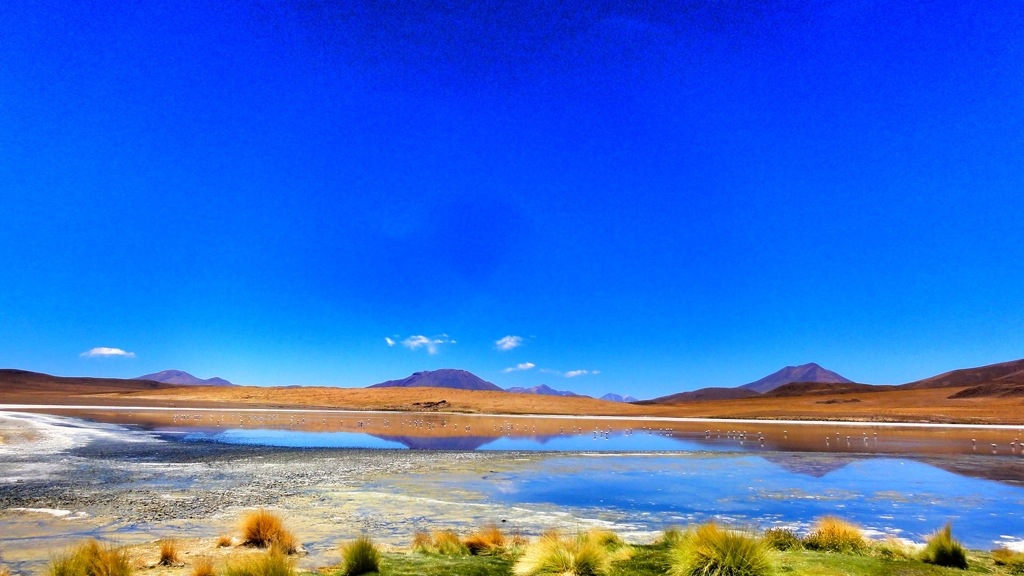
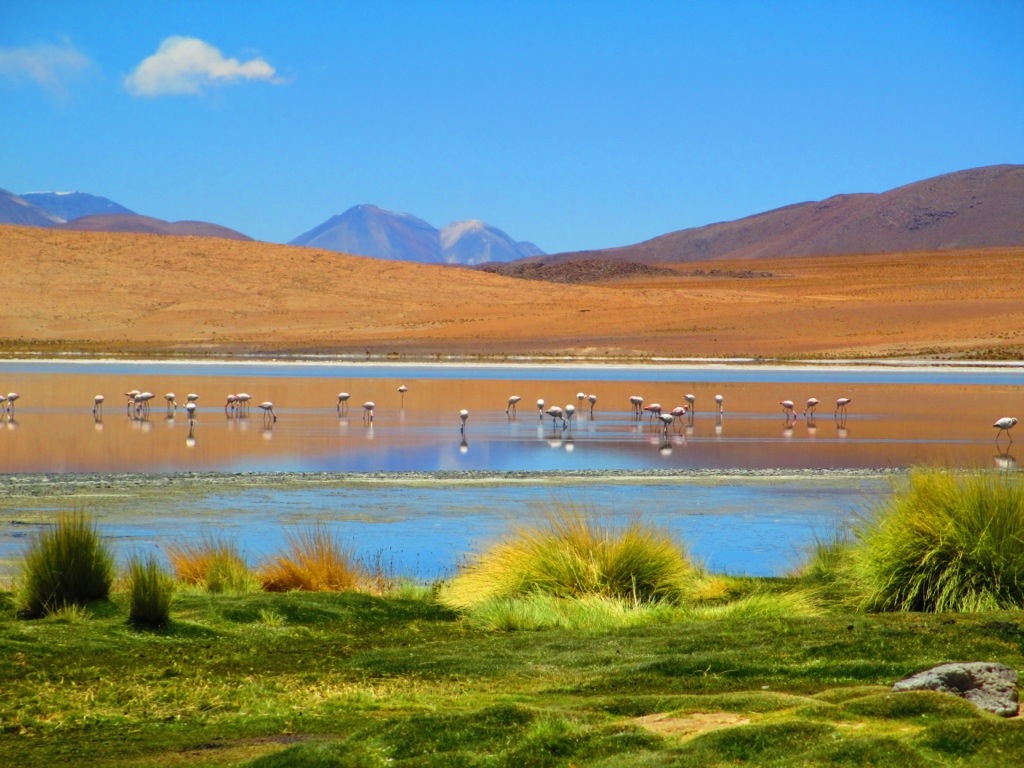
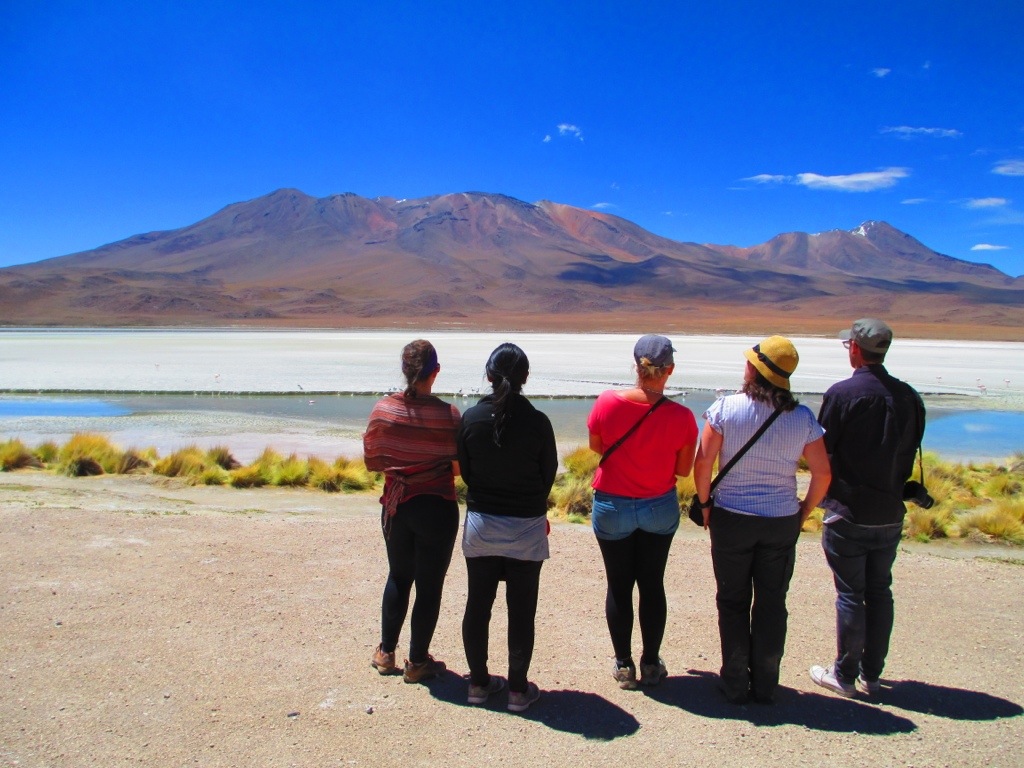
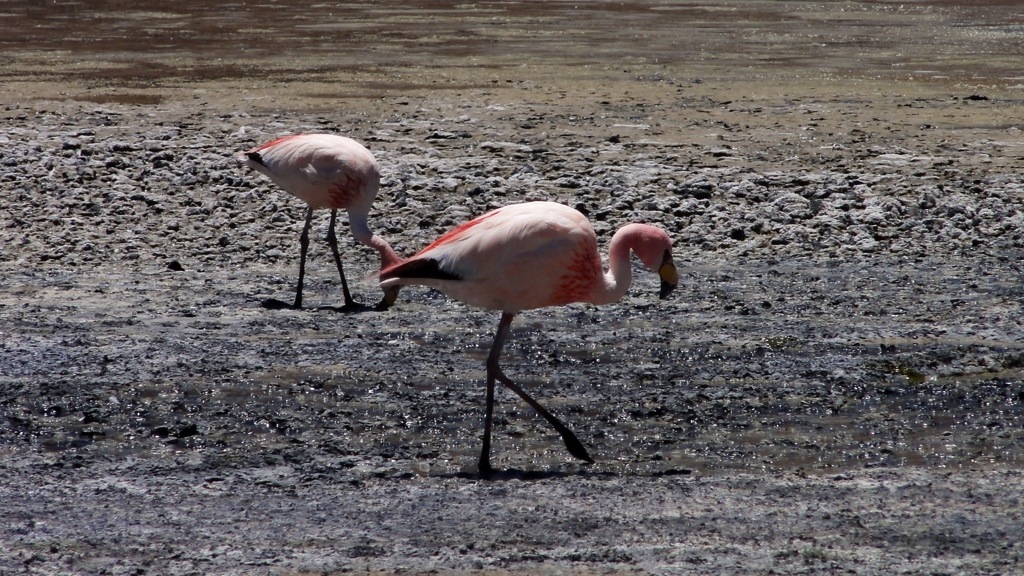
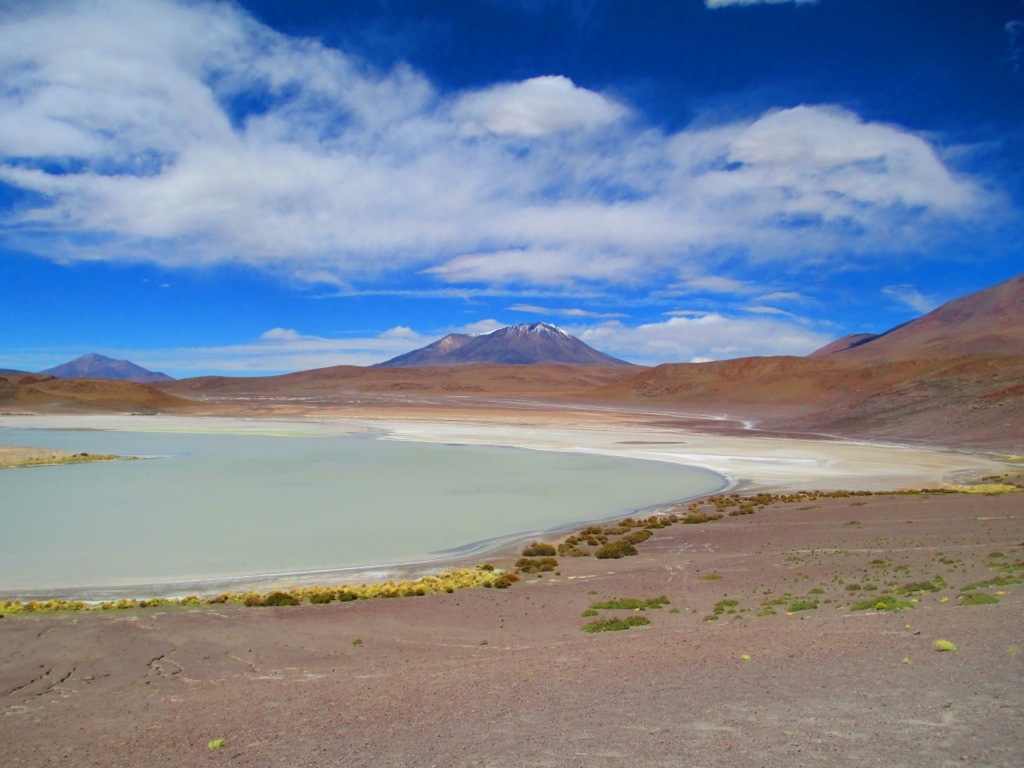
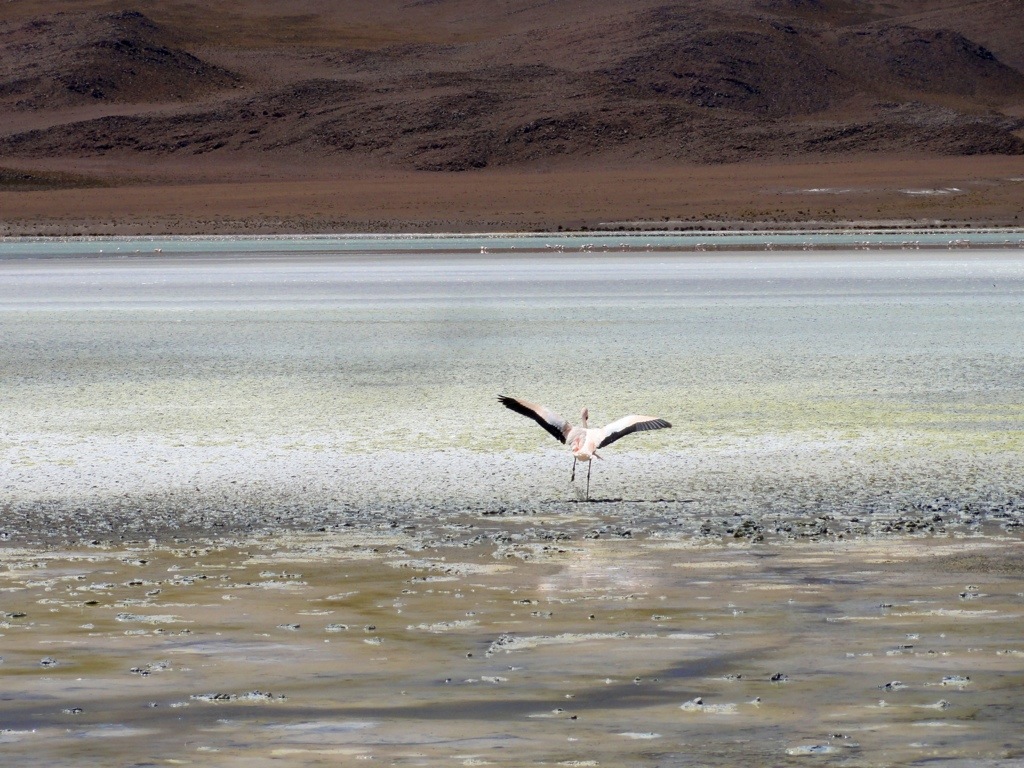
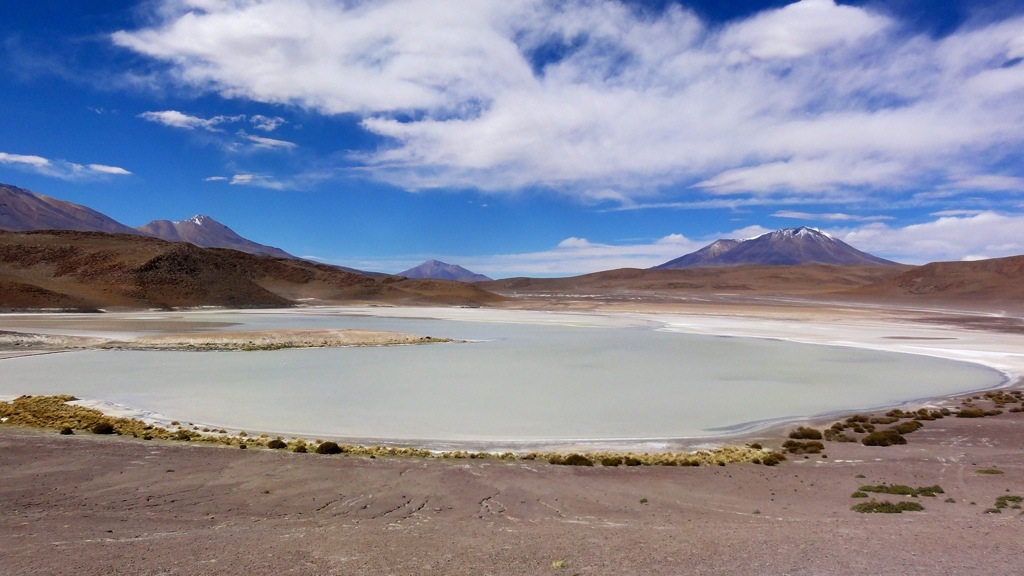
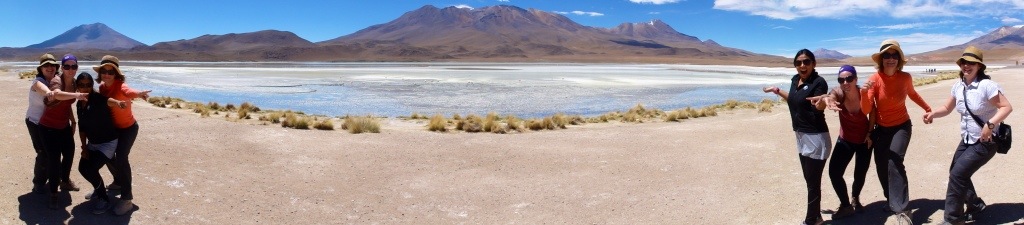
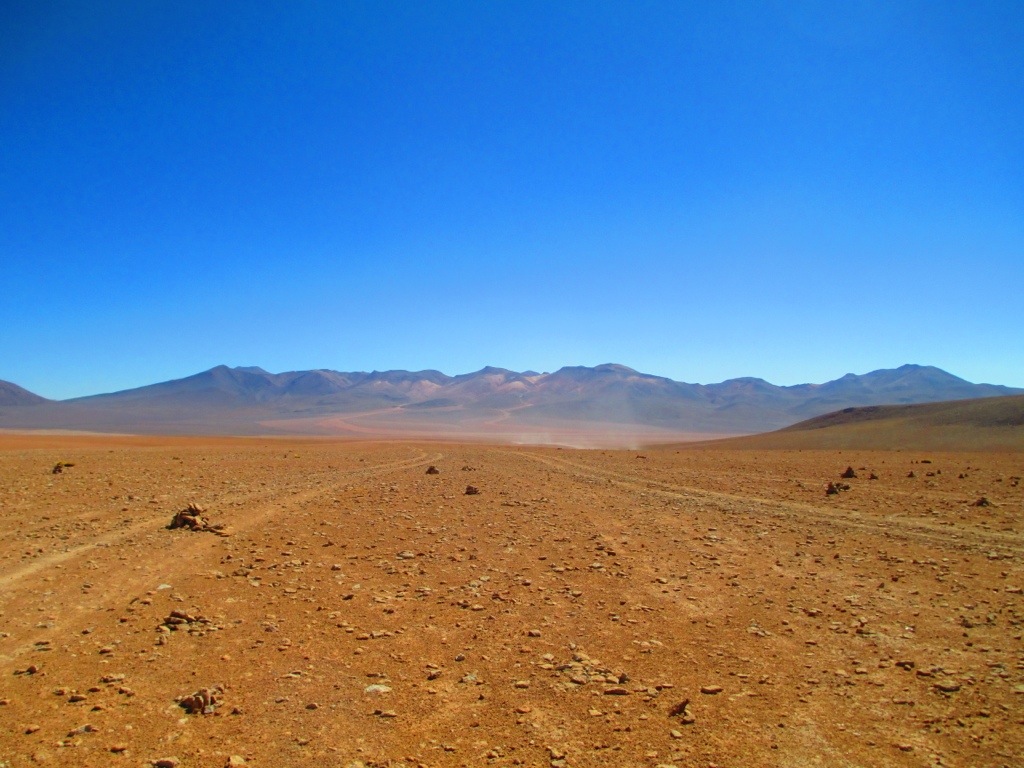
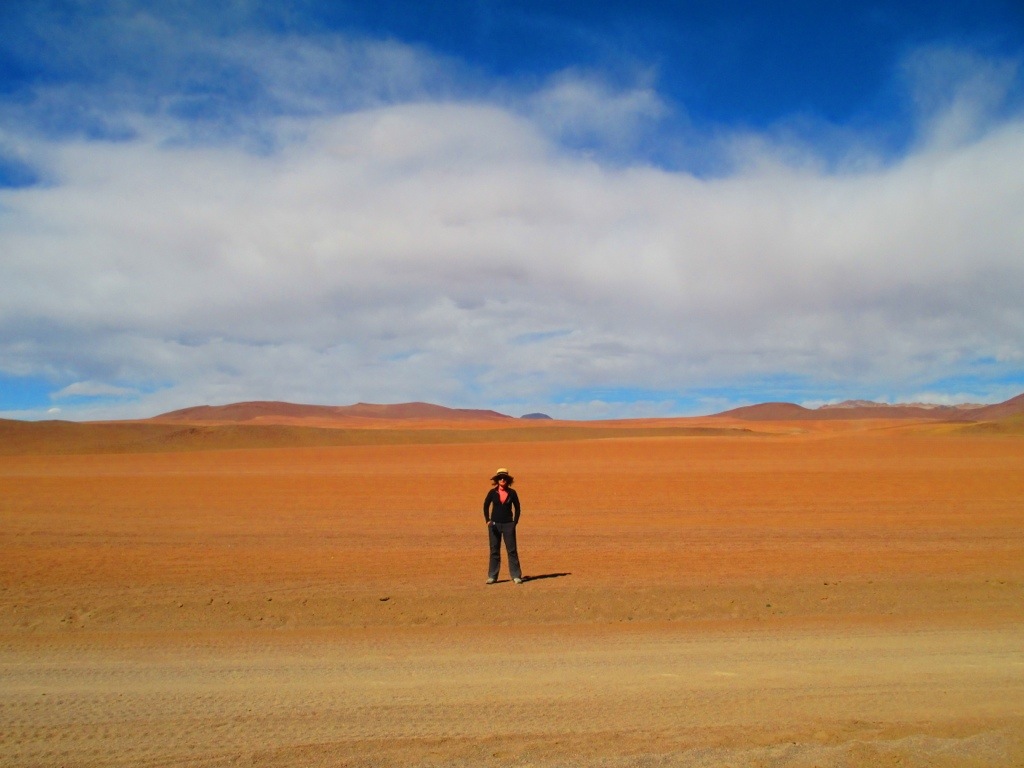
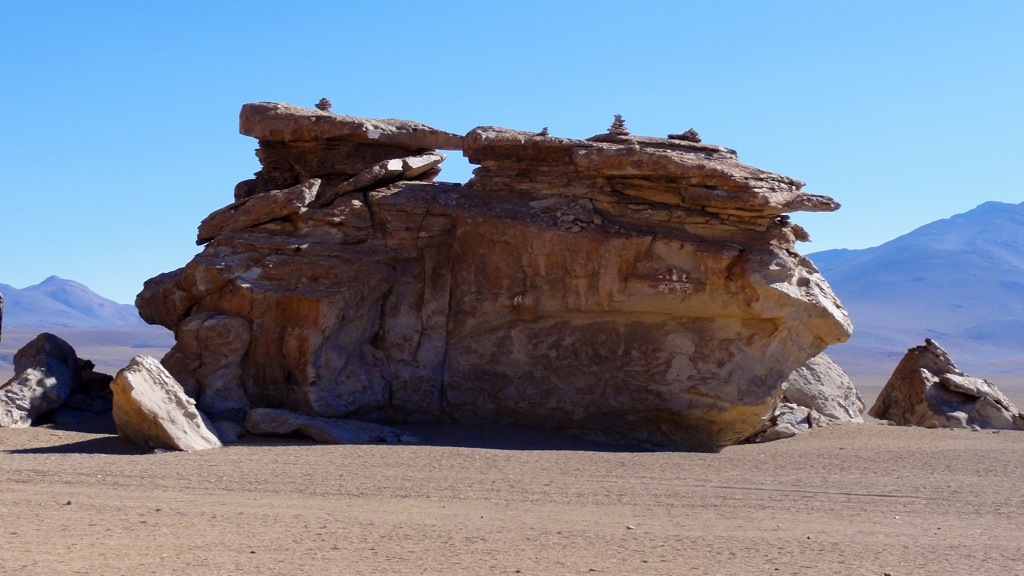
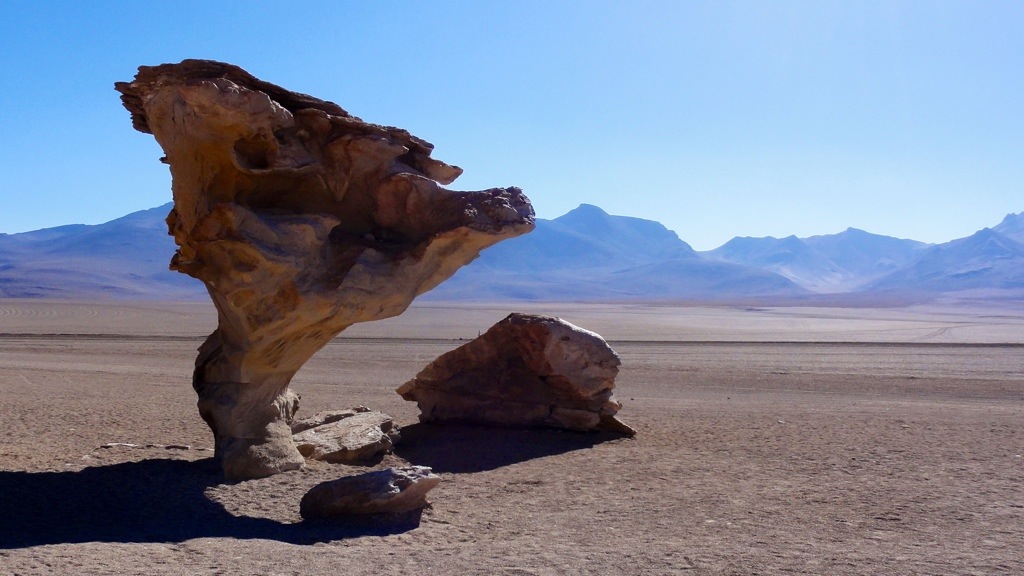
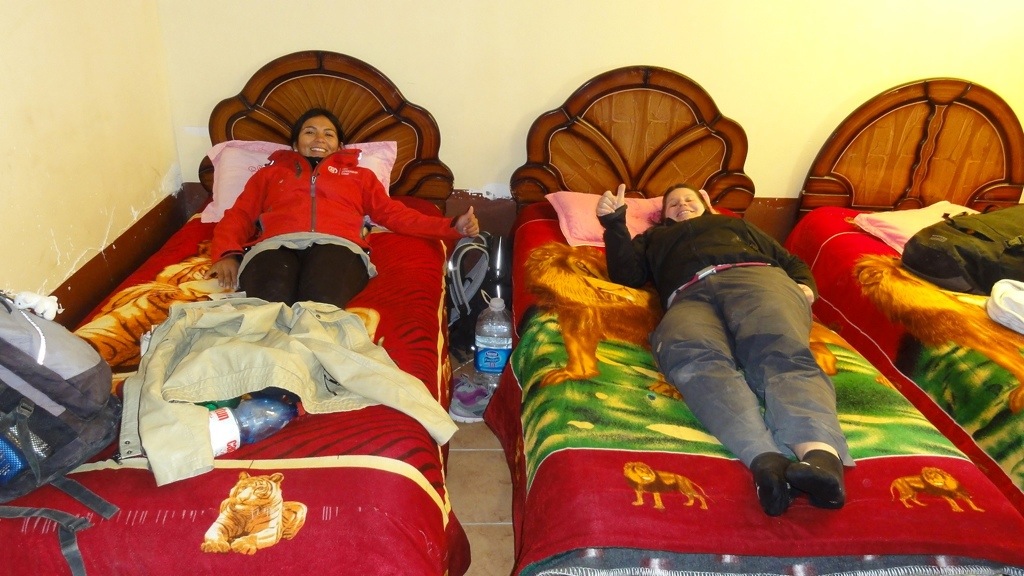
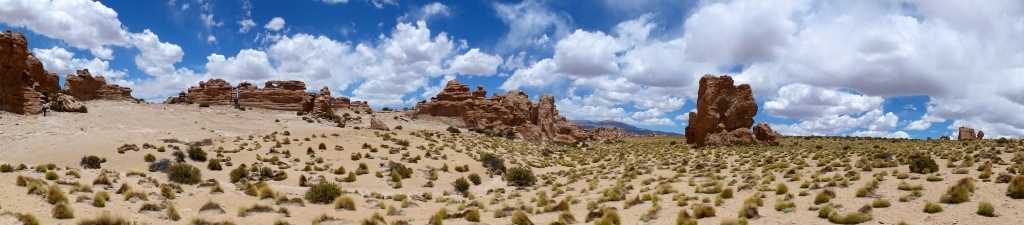
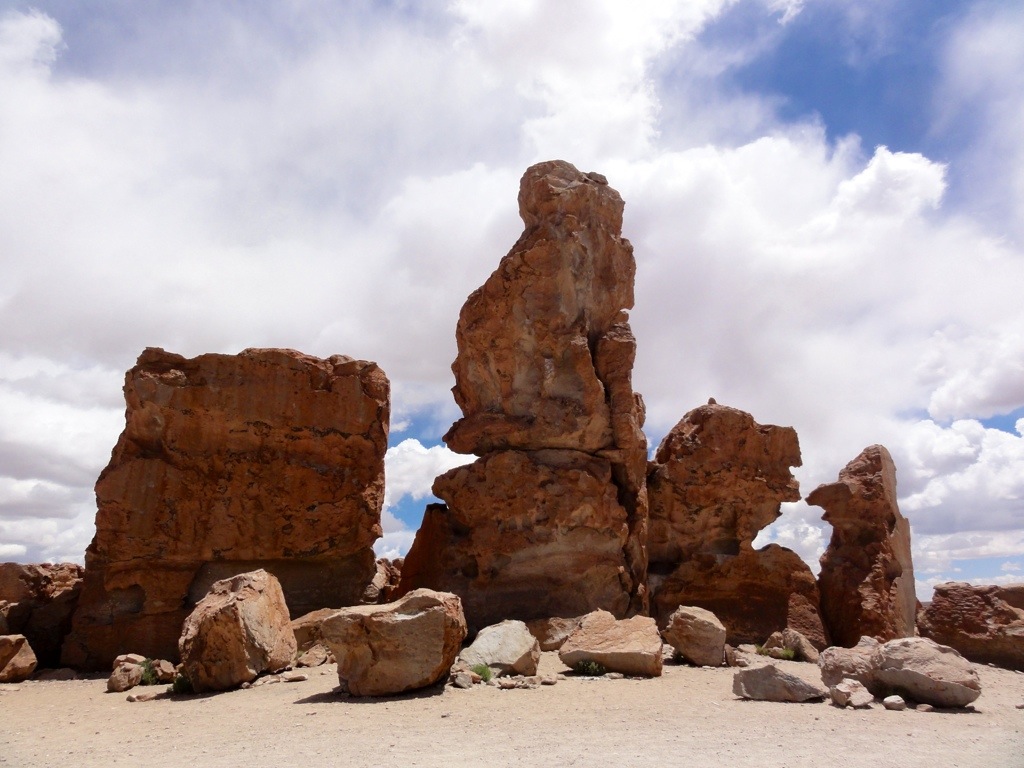
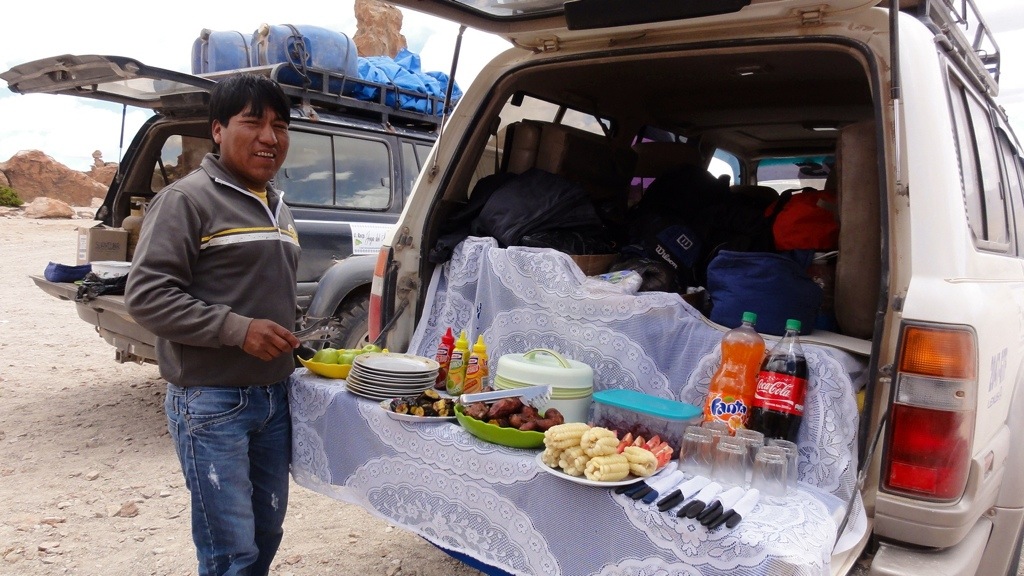
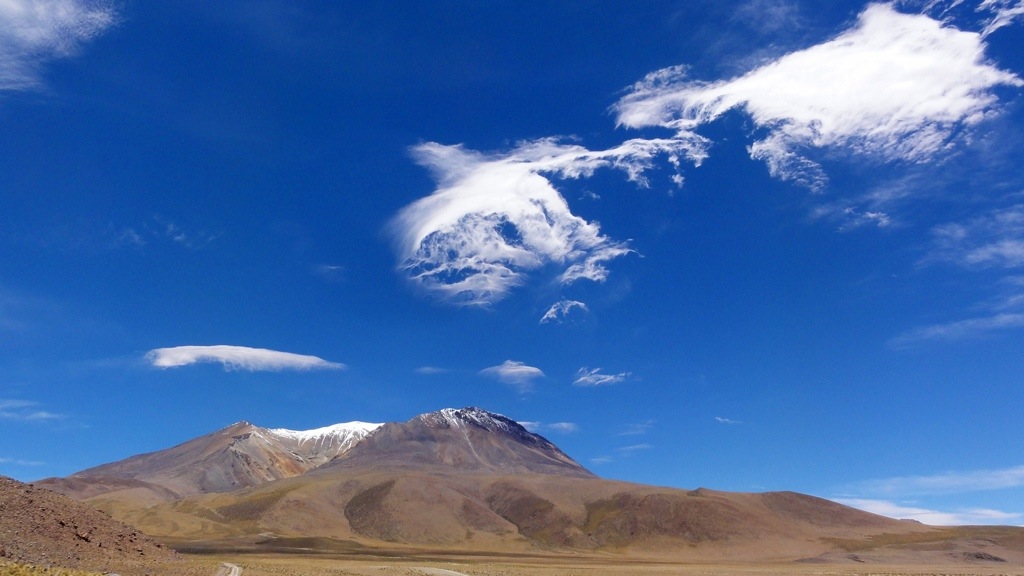
Our first stop was a view of volcano Ollague that is active with a white plume of smoke billowing from the side, we only walked a few hundred yards up a rocky escarpment for photos and all of us were really out of breath. We then drove higher to our first Laguna complete with flamingos, Laguna Cańapa 4265m. We also had lunch here, and like the rest of the food prepared by our cook for the trip it was really good! It’s hard to explain the contrasting colours and scenery, and how beautiful everything was, hopefully the photos will do some justice! As we climbed higher and higher after lunch most of us were experiencing light headaches, and tiredness. We stopped at three more lagunas, Laguna Hedionde (smelly lake), Laguna Honda, and finished by laguna Colorado (the red lake) (4500m). We had also driven through a desert area stopping at Silio de sol with very unusual rock formations including the Arbol rock, (the tree). We arrived at a small group of houses next to the red lake still at 4500m at six, the temperature had plummeted with the setting sun and a icy wind had picked up. We had a room for all six of us for the night. Very basic, no showers or hot water, but plenty of blankets for the freezing night temperatures. By this point the altitude had taken its toll on one of our group quite badly, and most of us were pretty shattered. We were in bed by 10pm, apparently an alarm was set for midnight but I did not hear it!

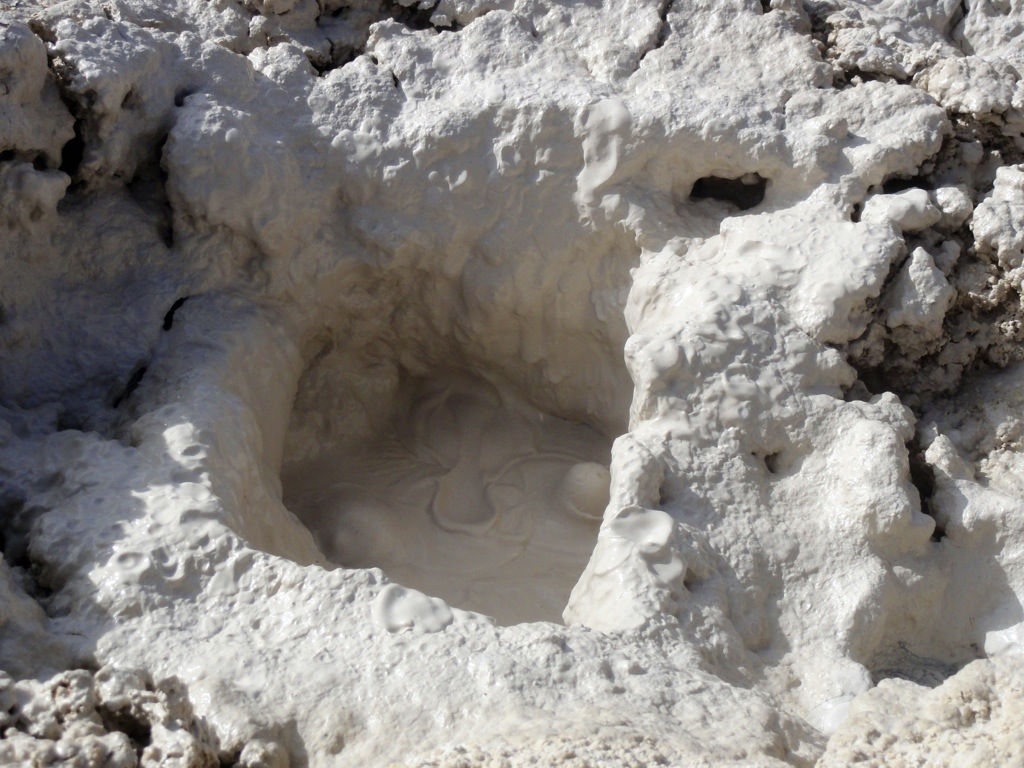
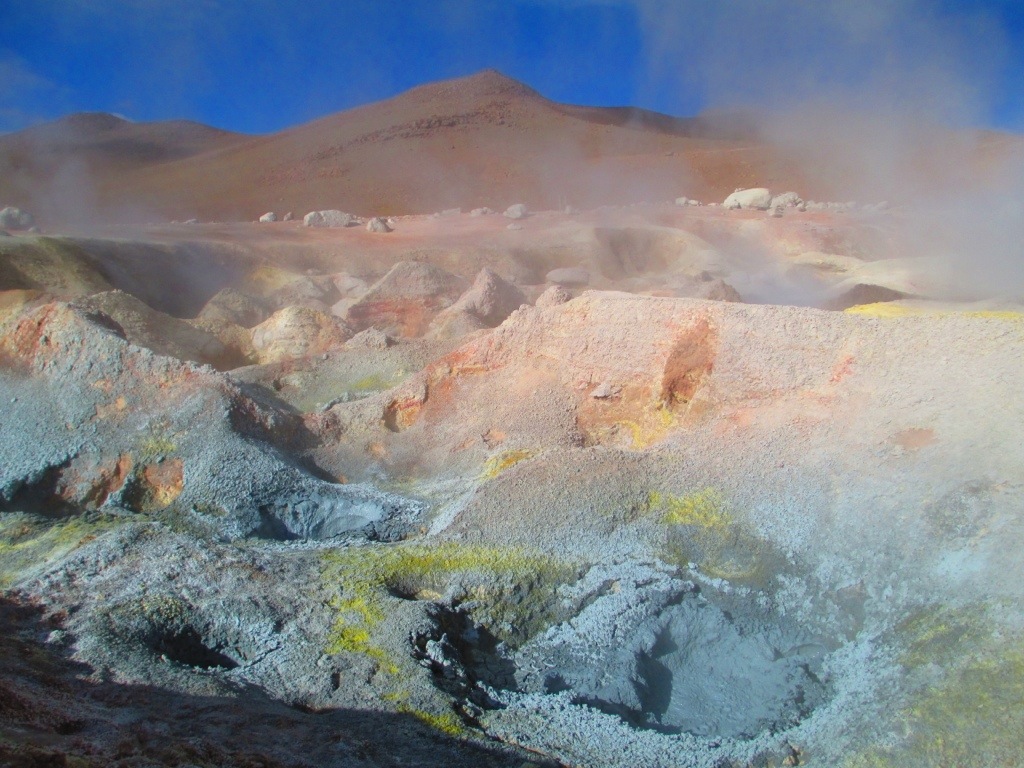
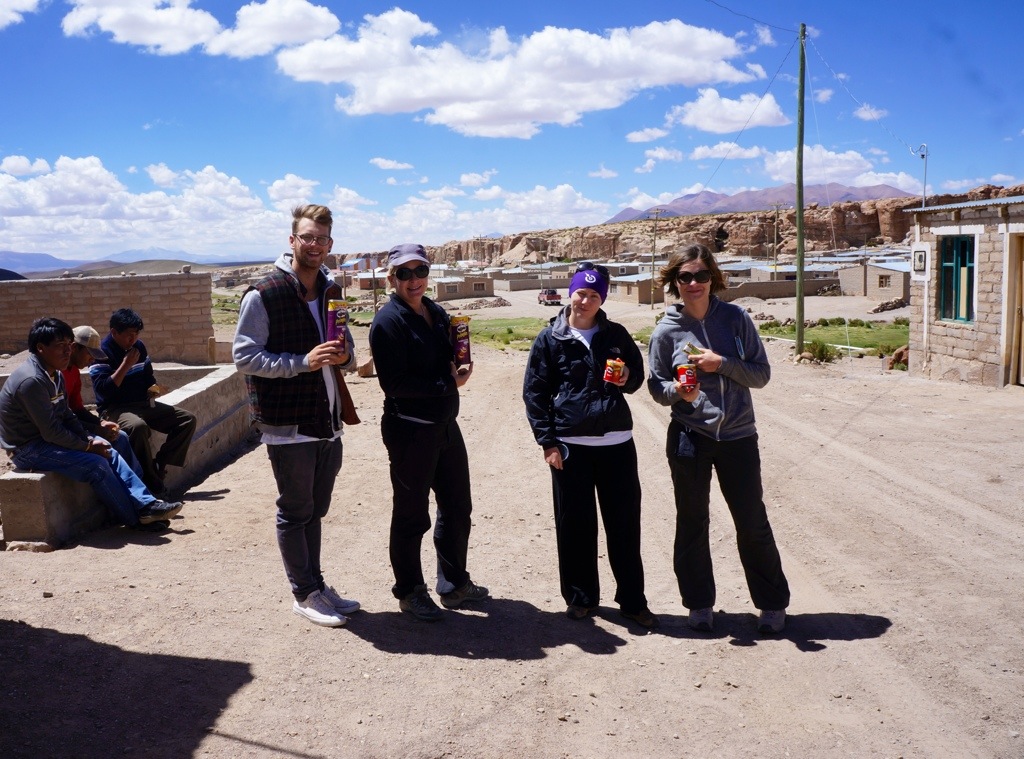
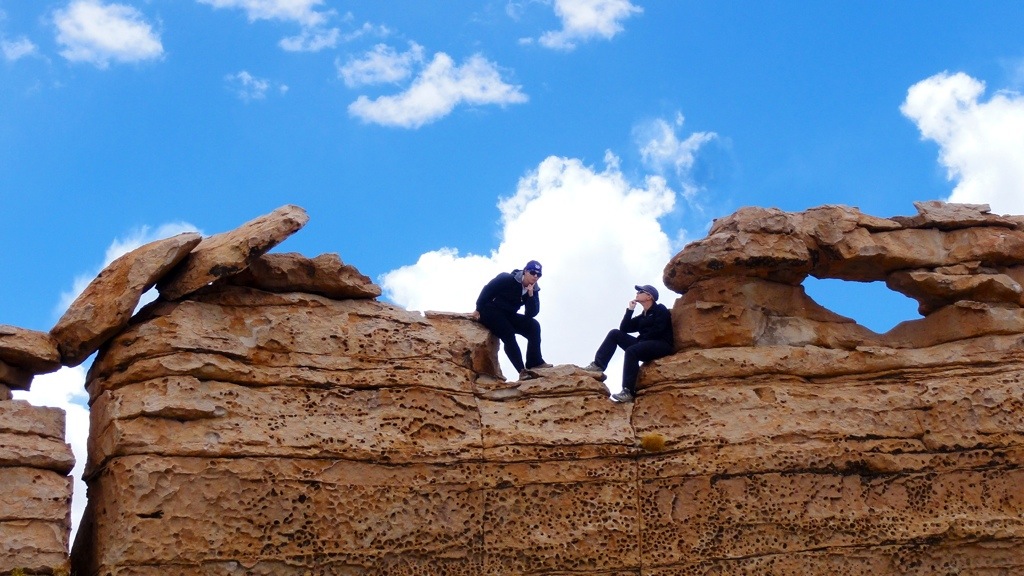
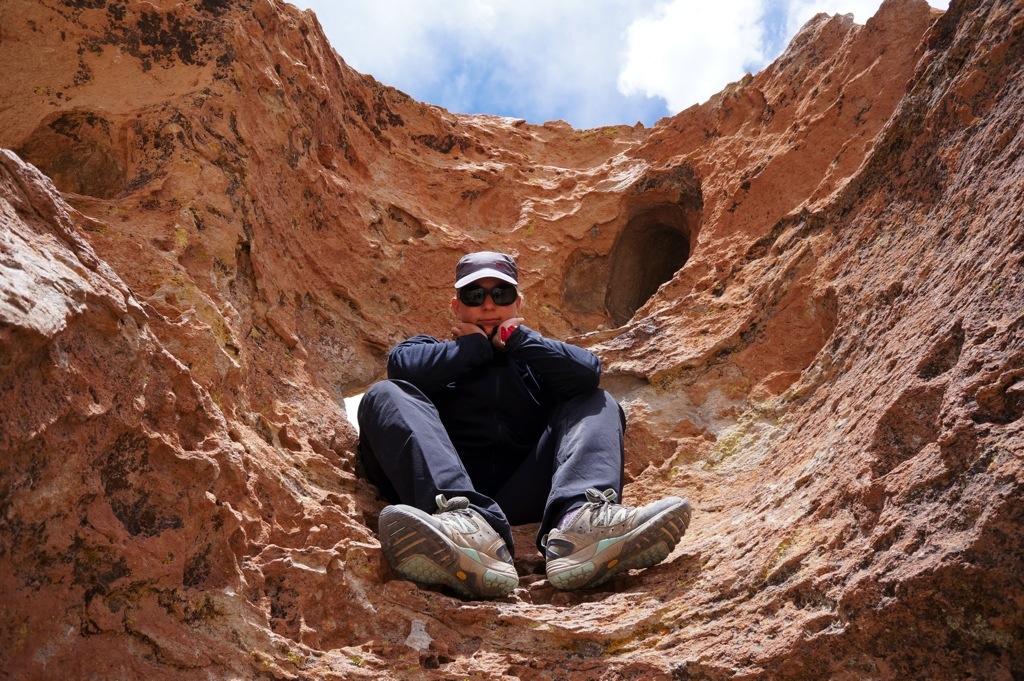
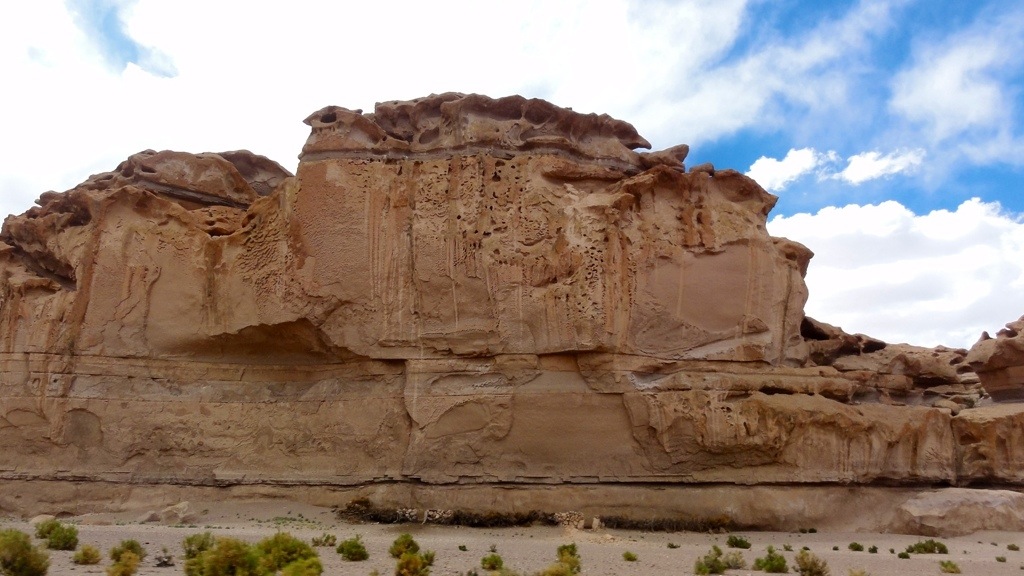
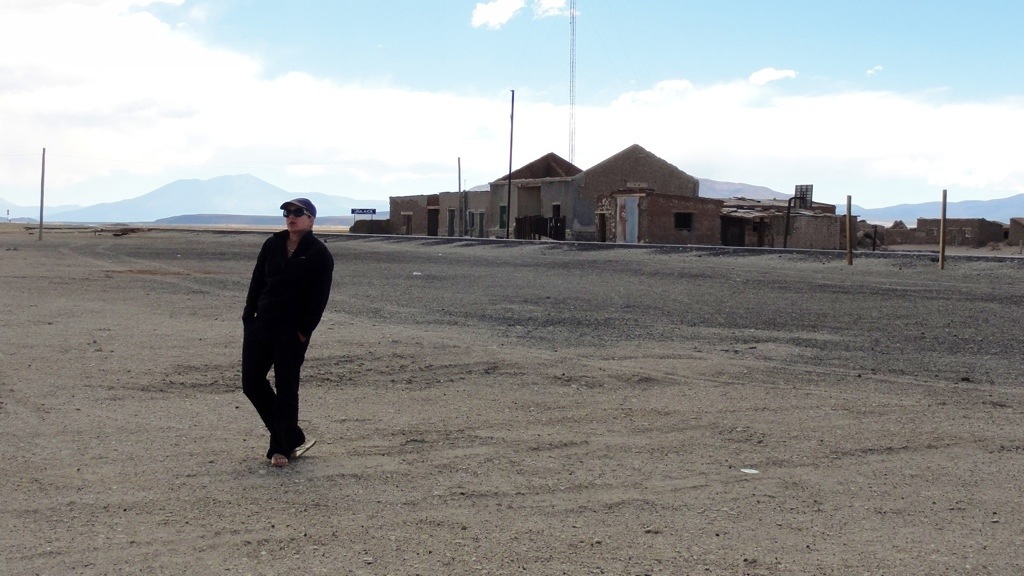
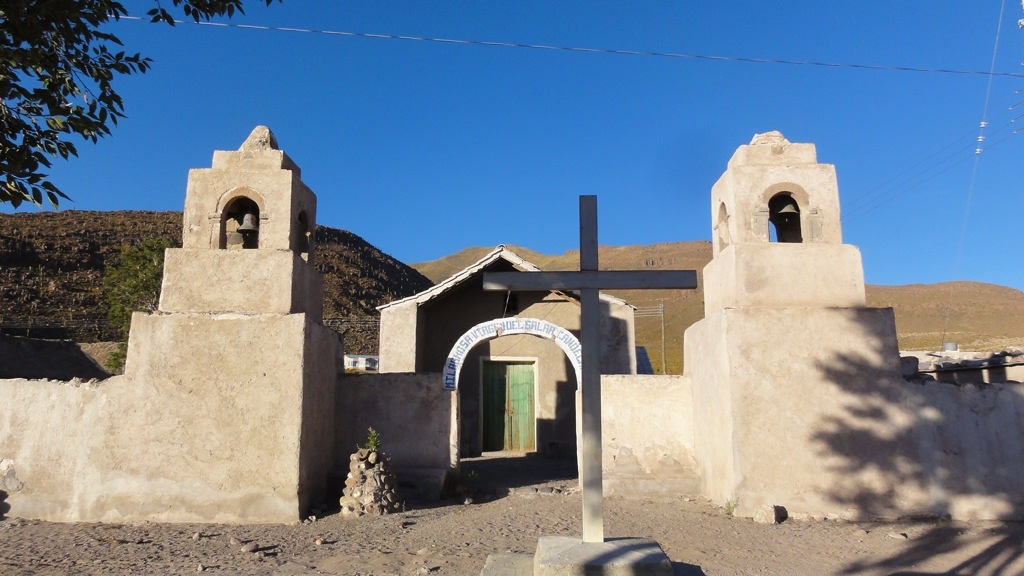
New Year’s Day we set off at 7am and headed for the highest point of the tour at 5000 metres. We all wrapped up in our thermals and hats, as the start of the day was really cold. This was to see the worlds highest geysers “Sol de Mañana” and they were really impressive! Huge clouds of steam bubbling from sulphurous stinky muddy craters. The drivers gave us lollipops as we drove down from this high point which definitely helped with the altitude and by this point other then one of us were feeling “ok”. We had lunch at Rock valley, really dramatic rocks formations that we were allowed to climb as well. You could have spent a whole day there alone taking photos, it was really spectacular. After that we drove up through a Quebrada with more contrasting rock colours and shapes. We stopped in the desolated small miners town of San Juan for ten minutes for the drivers to have a break. We eventually reached the edge of the Salt lake and arrived at our “salt hotel” mid afternoon at San Pedro de Quemes. The hotel was very basic from the outside and didn’t really look like too much, but inside the corridor and the floors were covered in white rock salt, and all the walls, beds, tables and chairs were made of salt bricks and the dining lounge area decorated with bright cushions and cloths. It was still very basic in some ways and only had electricity from 7-10, but they did have one shower and as our group was first to arrive we bought our shower tickets and got in first. It was so good to wash the dust from two days in the desert away and get clean! Again it was a very early night with electricity off at ten, and a couple of the group still feeling a bit below par. We were also all really excited about the Salt Flats the next day!!……

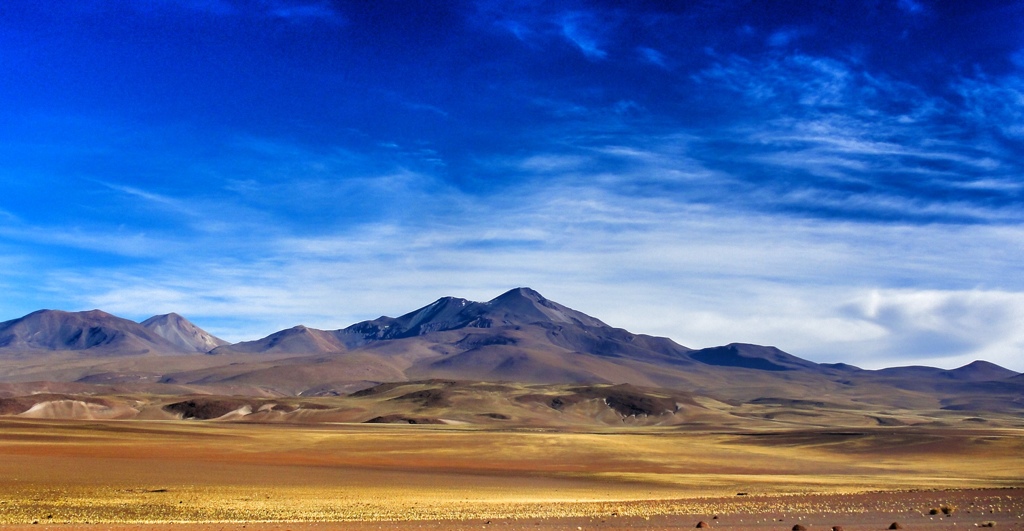
20130107-174933.jpg

20130107-174756.jpg

20130107-174950.jpg

20130107-174943.jpg

20130107-174927.jpg

20130107-175019.jpg

20130107-175039.jpg

20130107-175013.jpg

20130107-175005.jpg

20130107-175024.jpg

20130107-175046.jpg

20130107-175140.jpg

20130107-175108.jpg

20130107-175101.jpg

20130107-175214.jpg

20130107-175128.jpg

20130107-175156.jpg

20130107-175223.jpg

20130107-175228.jpg

20130107-175236.jpg

20130107-175241.jpg

20130107-175306.jpg

20130107-175253.jpg

20130107-175258.jpg

20130107-175310.jpg

20130107-175315.jpg

20130107-175319.jpg

20130107-175323.jpg

20130107-175340.jpg

20130107-175330.jpg

20130107-175351.jpg

20130107-175344.jpg

20130107-175355.jpg

20130107-175422.jpg

20130107-175408.jpg

20130107-175426.jpg

20130107-175418.jpg

20130107-175433.jpg

20130107-175414.jpg

20130107-175439.jpg

20130107-175450.jpg

20130107-175502.jpg

20130107-175446.jpg

20130107-175507.jpg

20130107-175517.jpg

20130107-175521.jpg

20130107-175555.jpg

20130107-175512.jpg

20130107-175603.jpg

20130107-175608.jpg

20130107-175614.jpg

The Salt Flats!!!

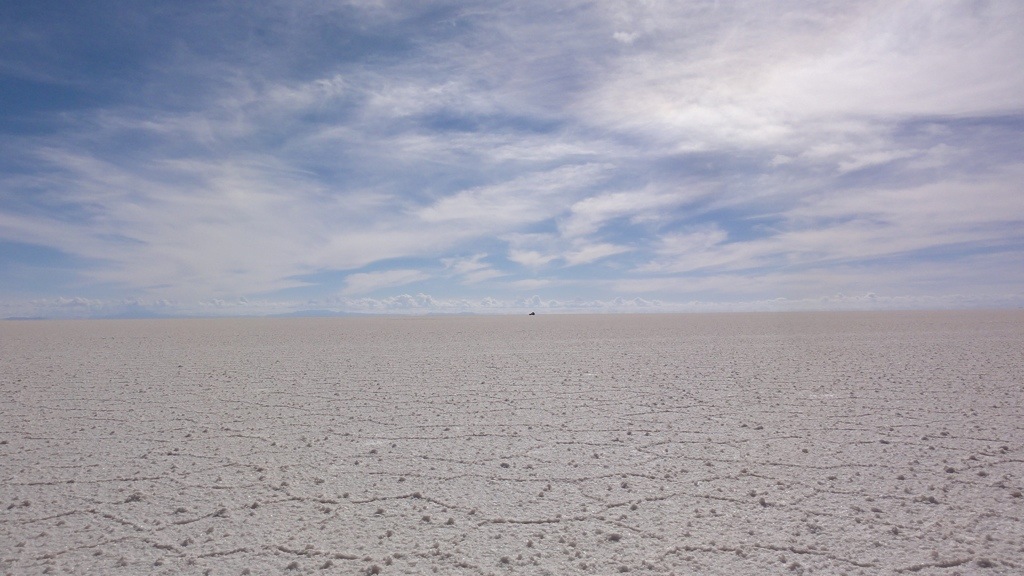
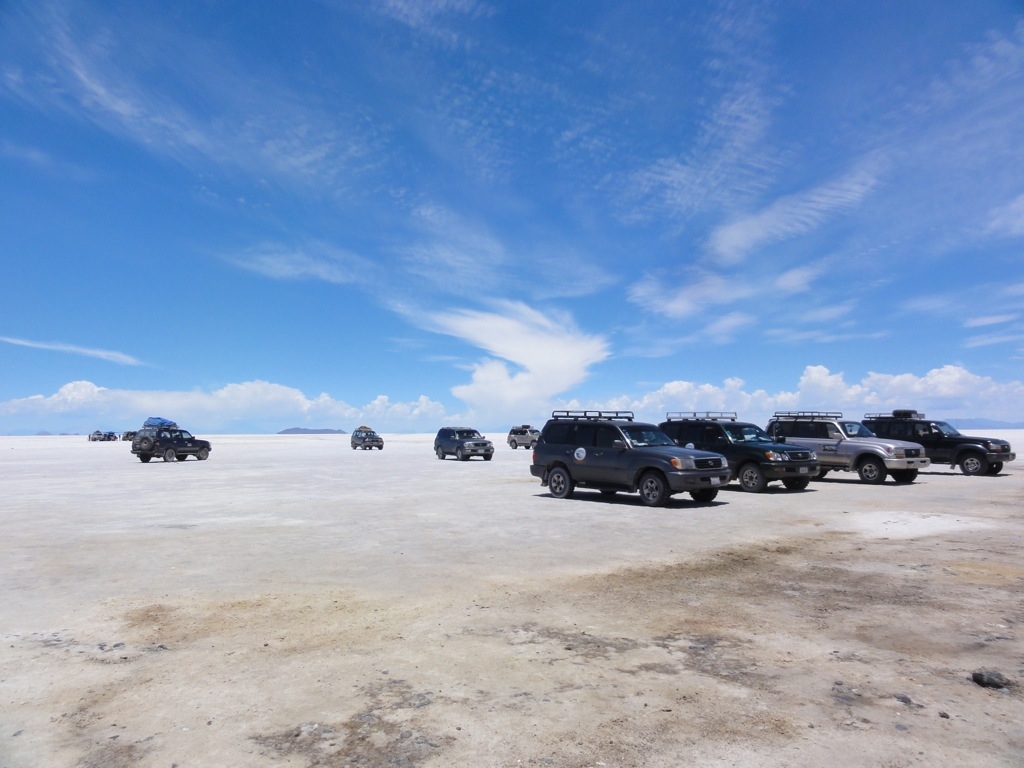
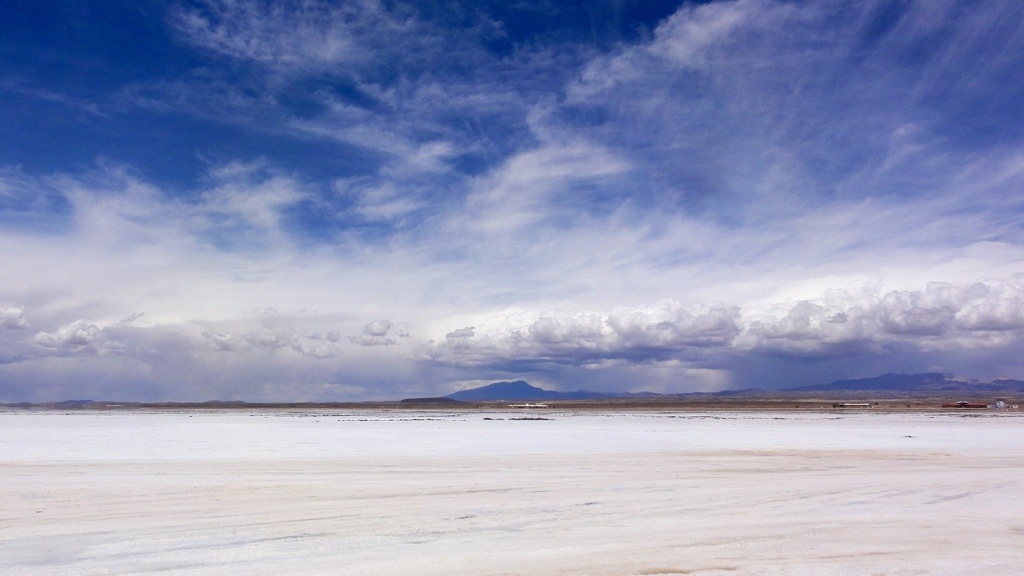
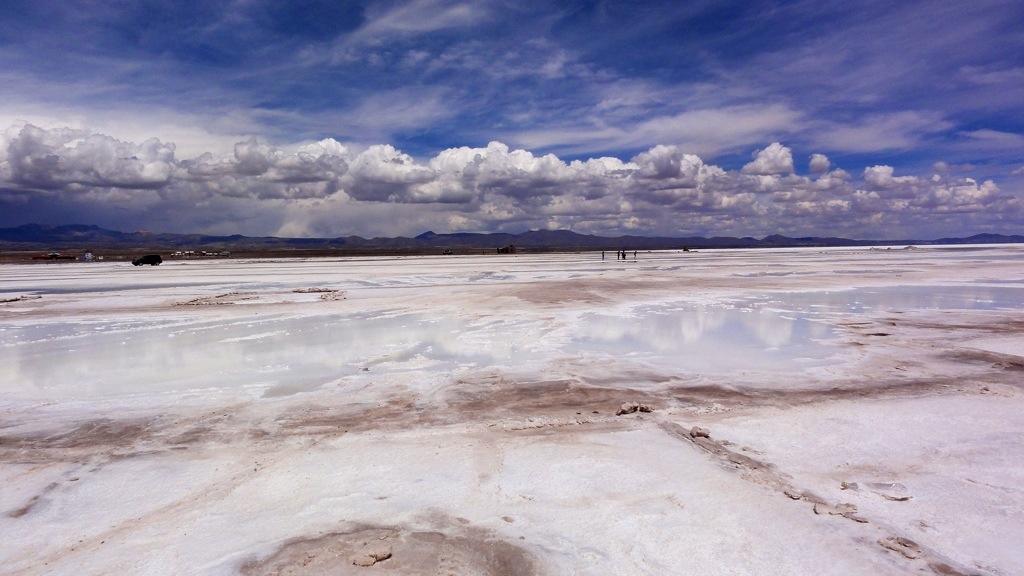
So our final day I got up a bit earlier then the others to grab a few photos in the tiny village we’d stayed in. We left at eight and as we were one the edge of the flats, we were driving on them within ten minutes, it was amazing!! For as far as the eye could see just brilliant whiteness.

Bit more lazy Wikipedia plagiarism:

” Salar de Uyuni is the world’s largest salt flat at 10,582 square kilometers (4,086 sq mi). It is at an elevation of 3,656 metres. The Salar was formed as a result of transformations between several prehistoric lakes. It is covered by a few meters of salt crust, which has an extraordinary flatness with the average altitude variations within one meter over the entire area of the Salar. The crust serves as a source of salt and covers a pool of brine, which is exceptionally rich in lithium. It contains 50 to 70% of the world’s lithium reserves. The large area, clear skies and the exceptional flatness of the surface make the Salar an ideal object for calibrating the altimeters of Earth observation satellites.”

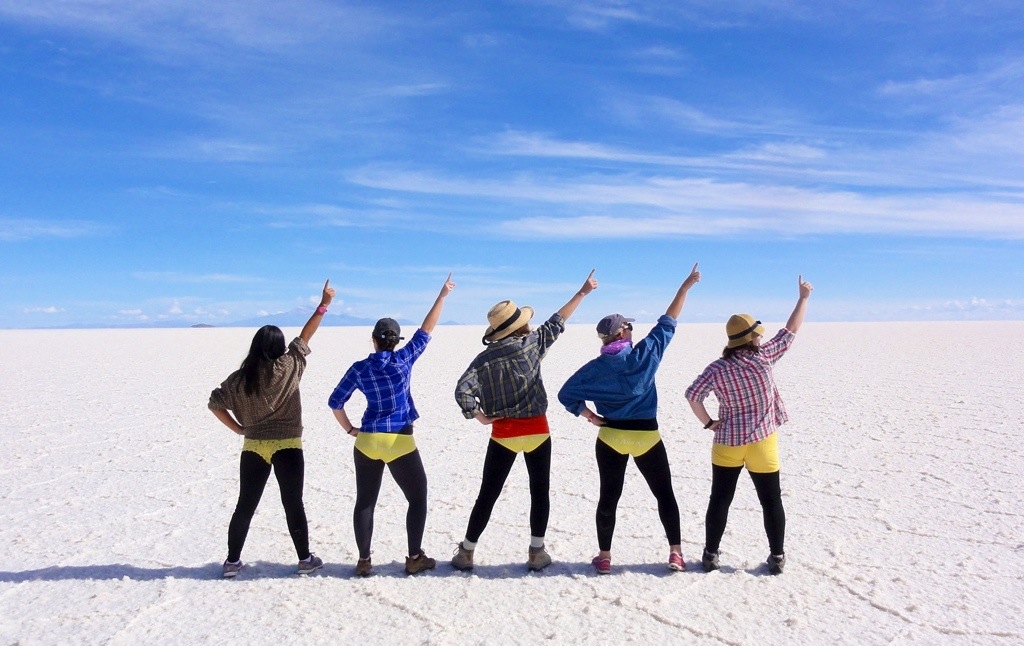
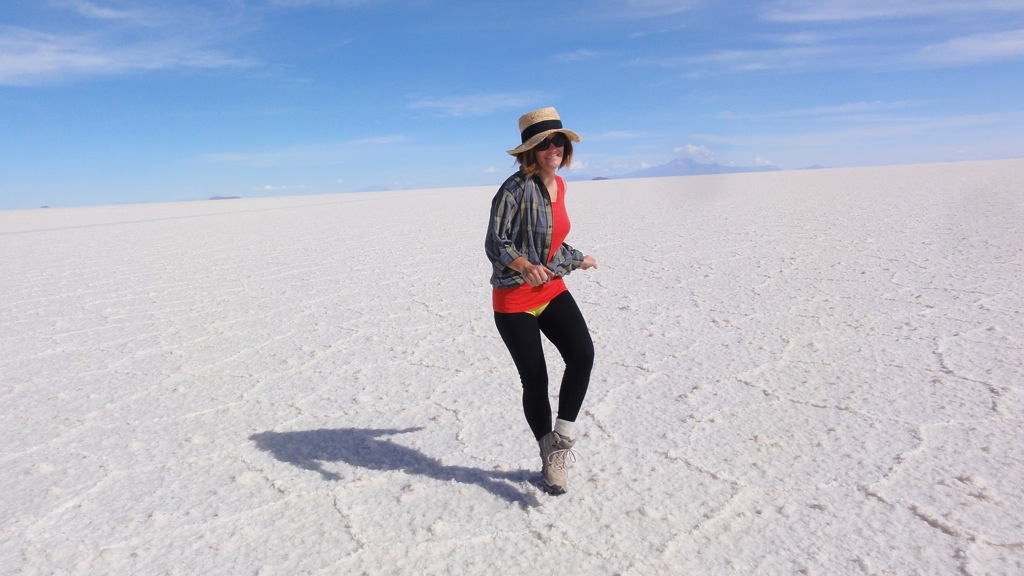
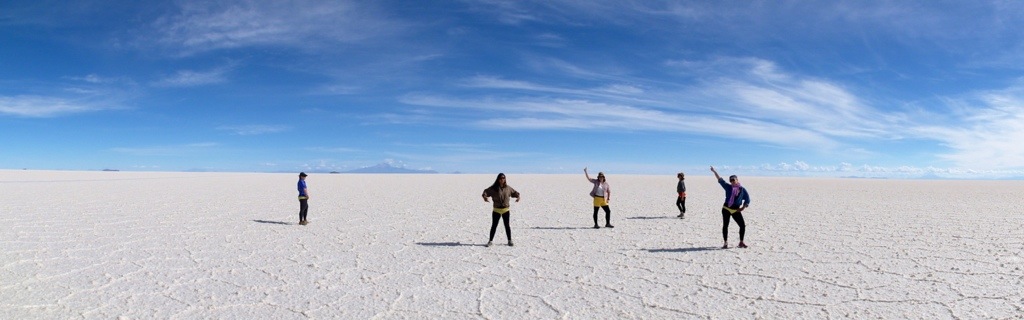
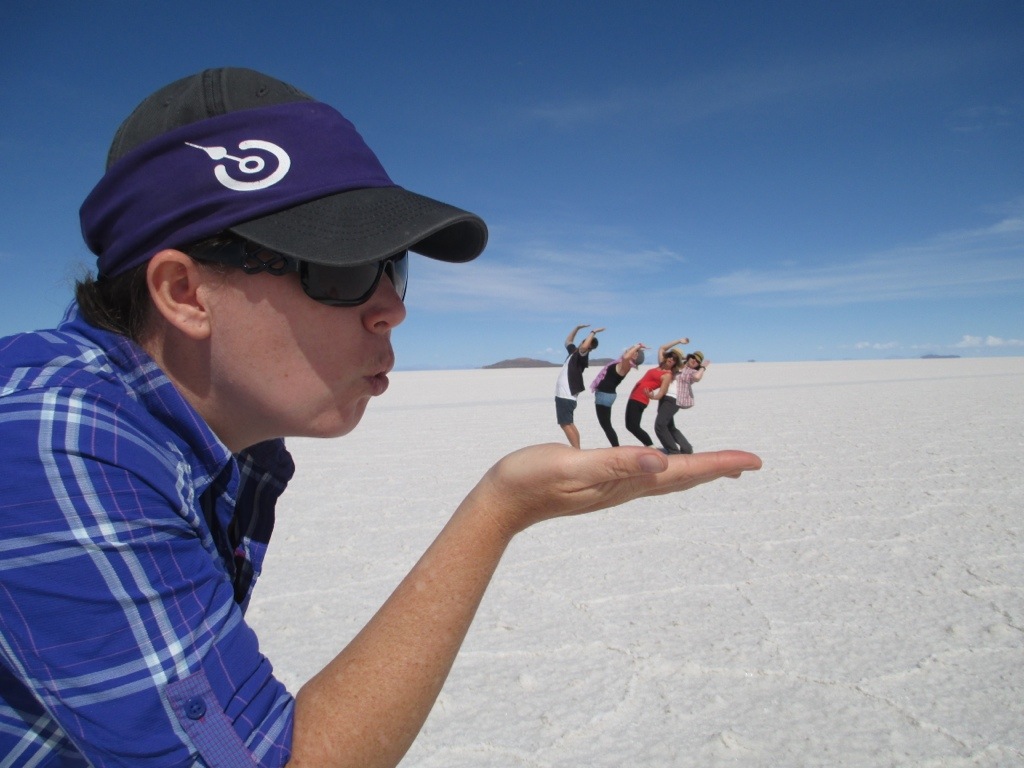
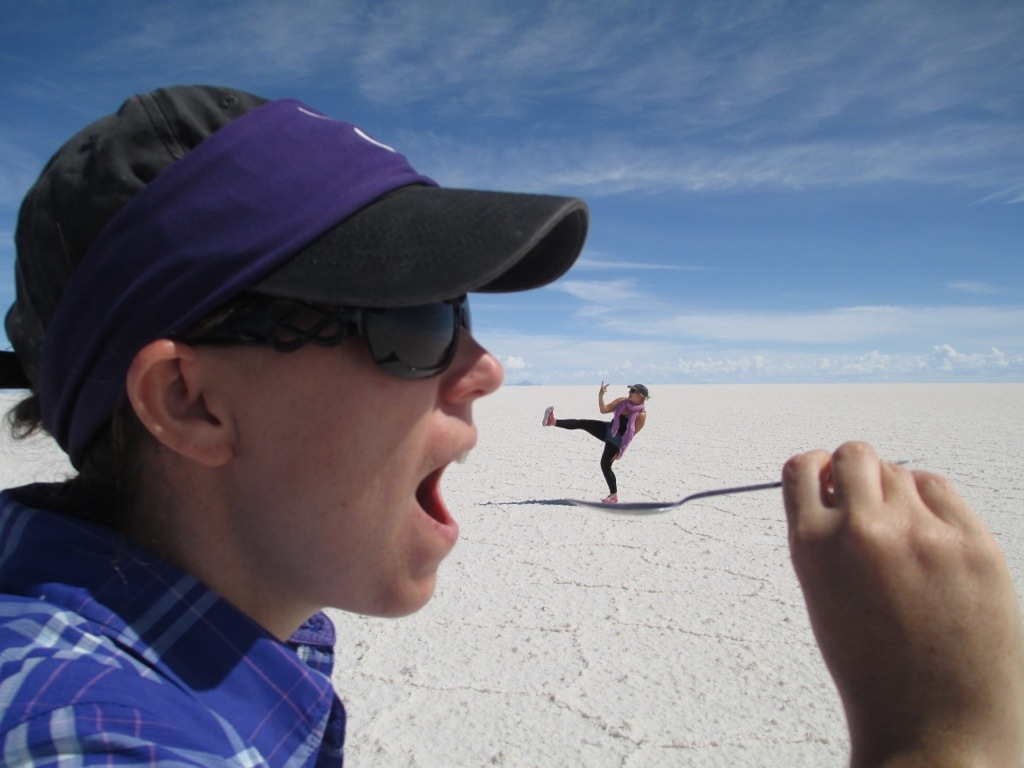
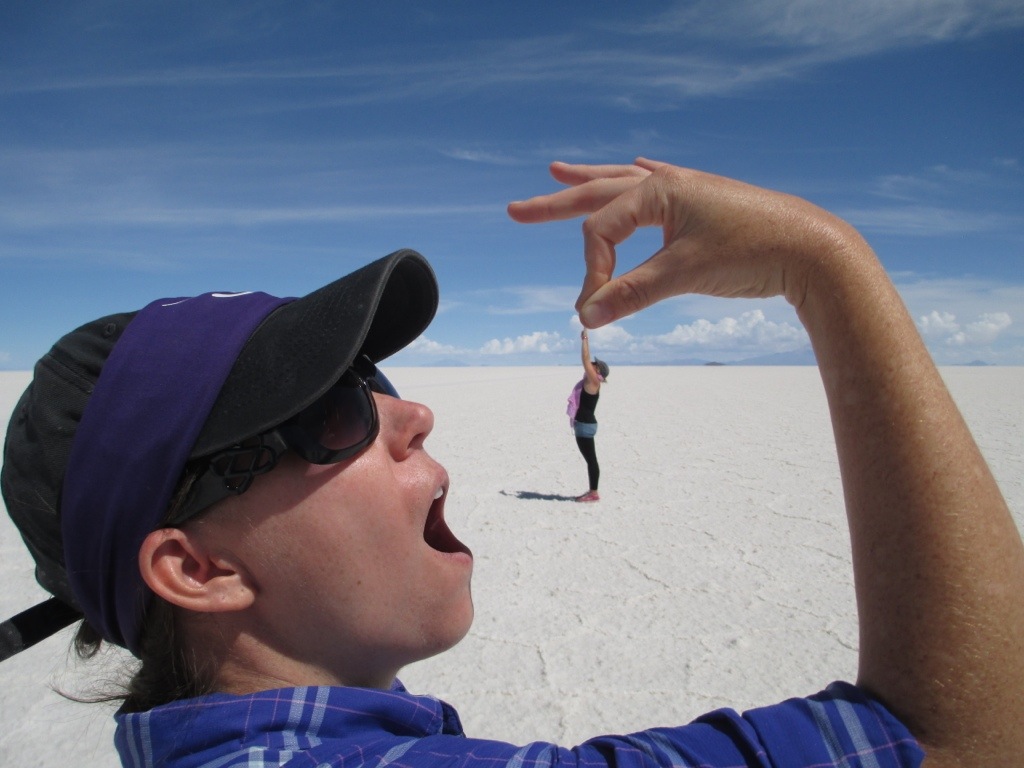
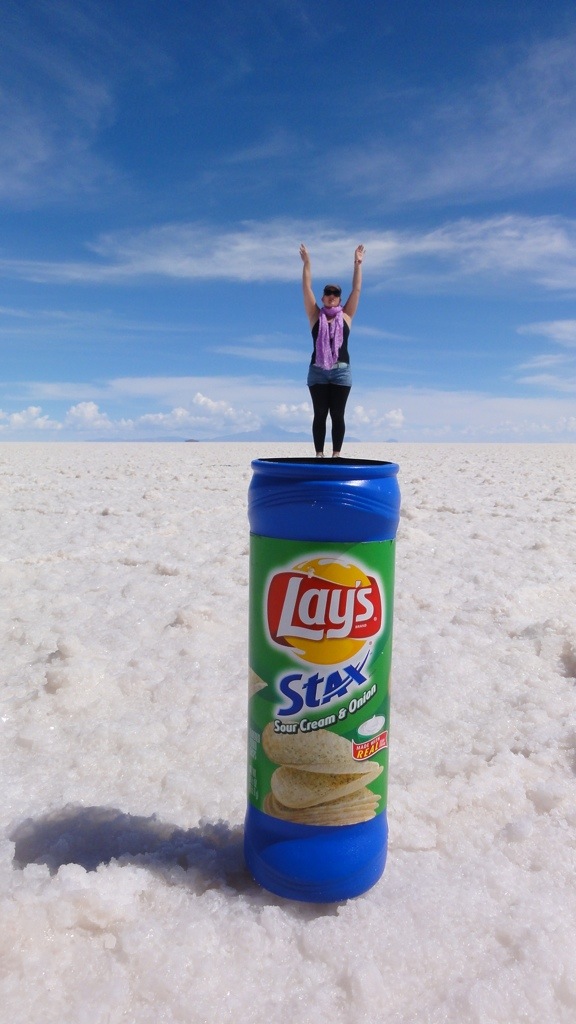
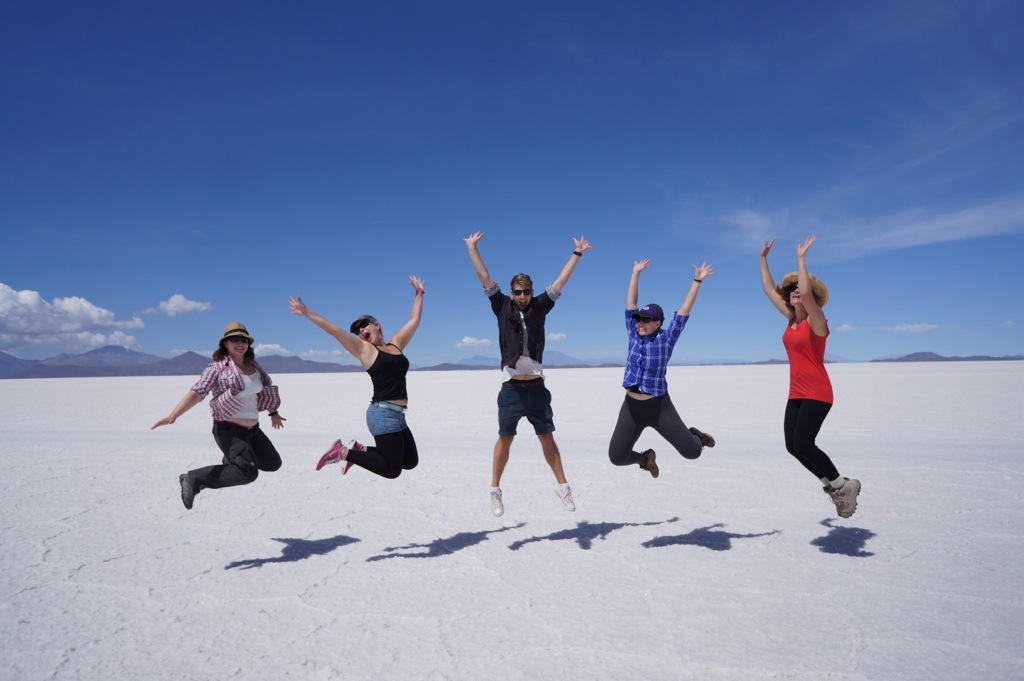
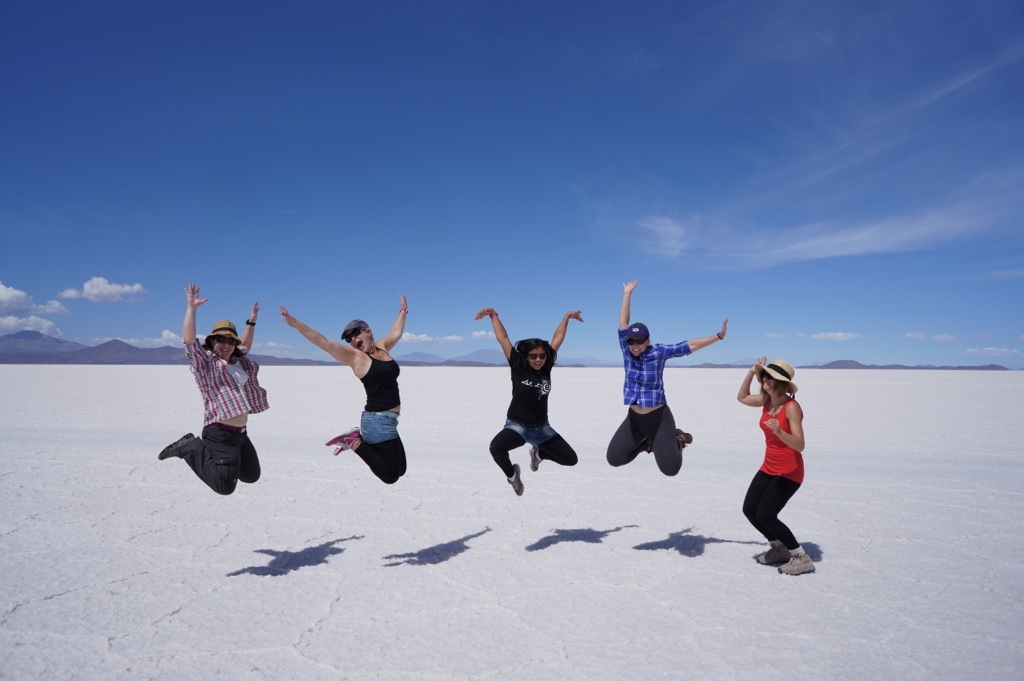
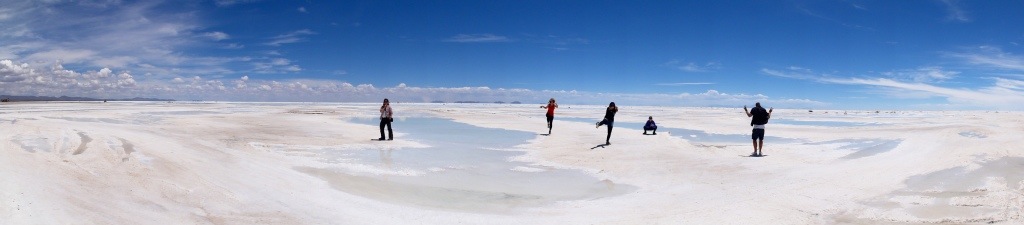
We stopped in the middle of the flats with no one else anywhere near us and had a couple of hours to muck around taking photos including the infamous perspective ones. Us girls had all bought yellow underwear with Happy new year on the back that we wore for the photos, to belatedly celebrate NYE, (yellow pants are worn in in several countries NYE to bring good luck for the new year). We also made a video of us all dancing around to a track we’ve been listening to. Very silly, hilarious fun and our CEO Nancy (Chief Experience Officer) has since edited and put it together…..I’ll post the video at a later date when I have it.

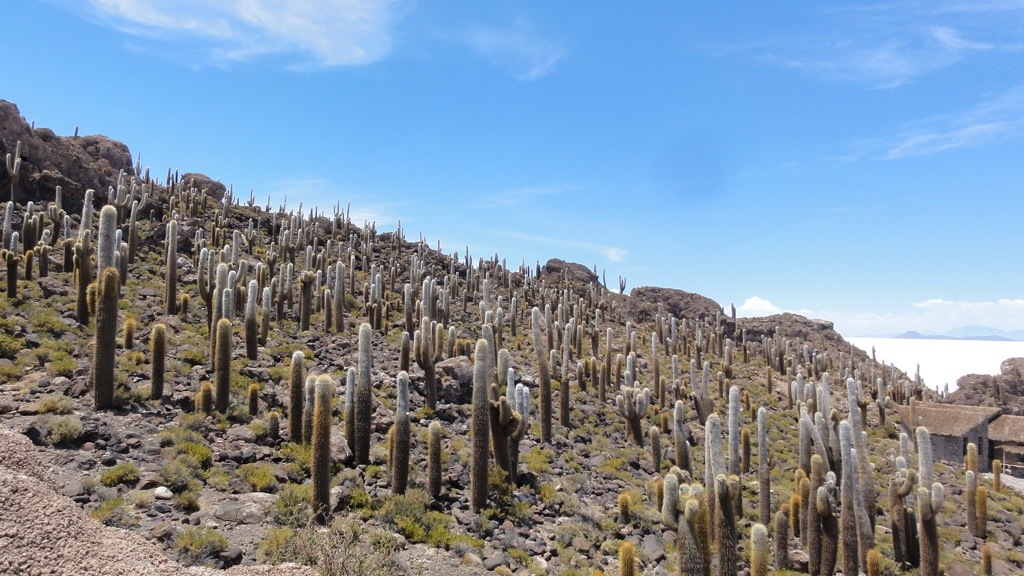
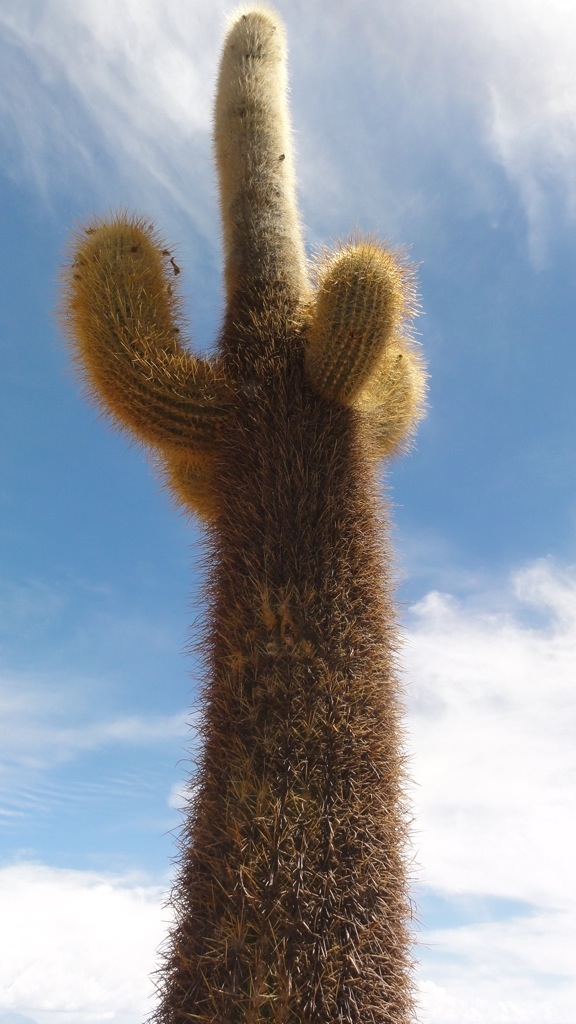
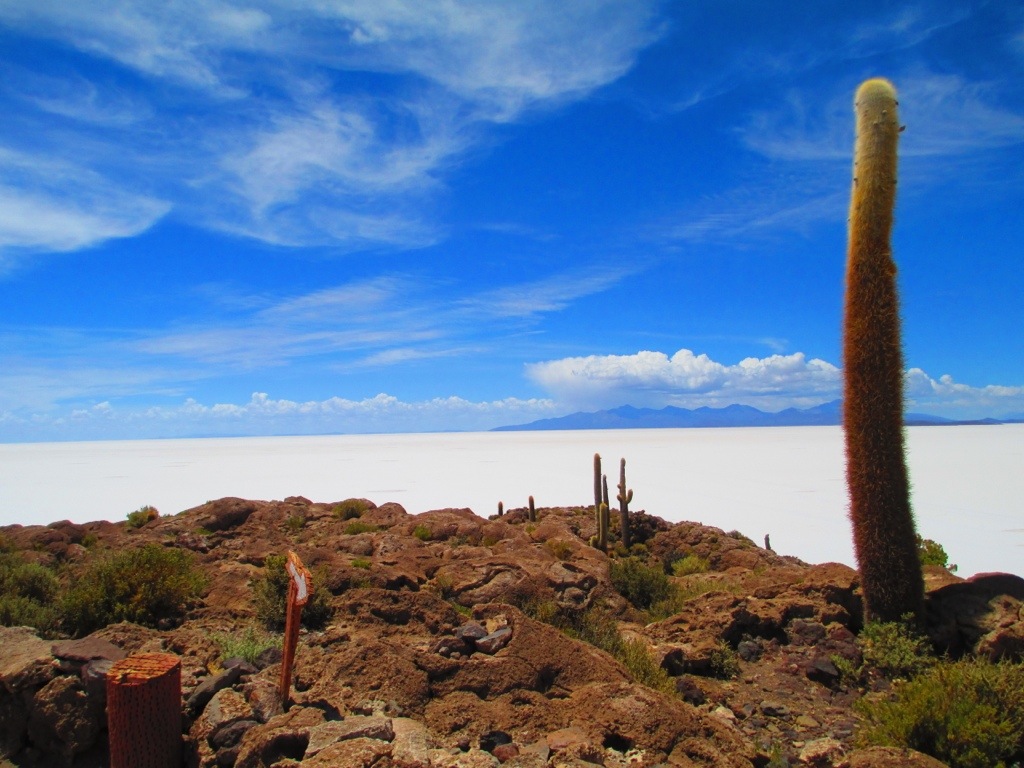
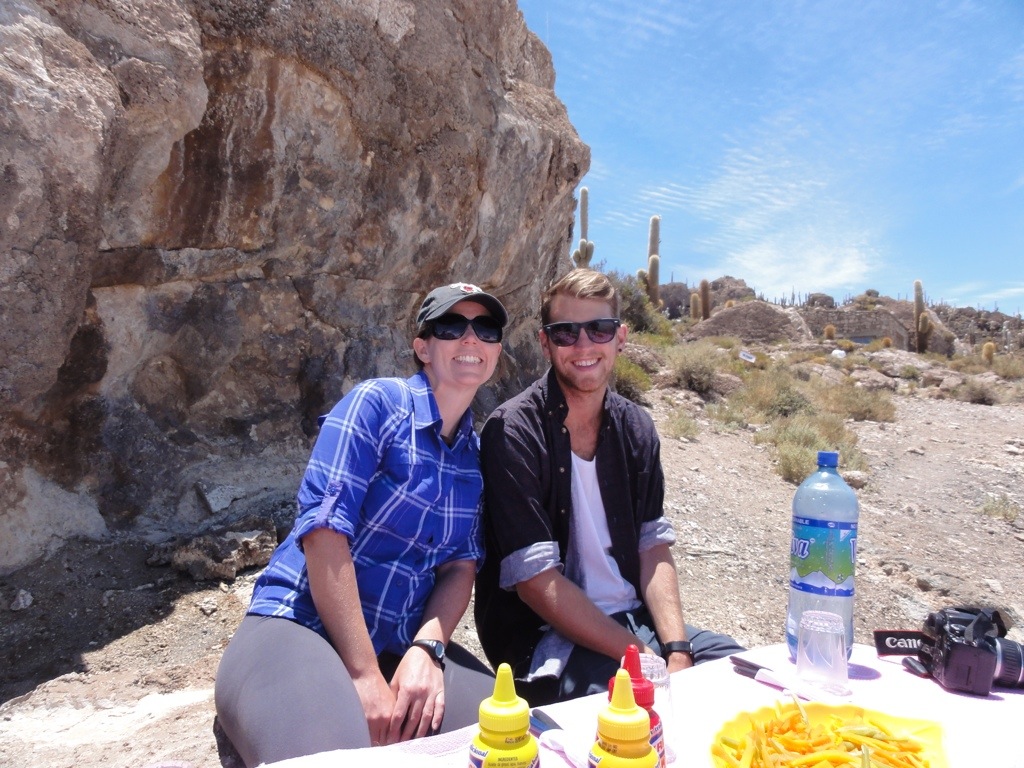
After a few hours fooling about with photos etc we drove to Isla Incahuasi right in the centre of the flats. This was the top of a volcano as the whole of the salt flats used to be above sea level. The small island is covered in Cactus, and at the very top is a sacrificial table which the incas still come to once a year to offer the sacrifice of crops, alcohol and two lamas. Even though we were lower then the previous few days we were still fairly high at 3656m and the fifteen minute walk to the top had us all gasping for breath again. The view from top was incredible, complete panoramic of the salt flats stretching away. As it was nearer lunch time a lot of other 4x4s were making there way to the island for lunch, and watching them approach the island was like tiny toy cars crossing a white carpeted floor. On our descent Ronaldo our cook had prepared our final lunch that we sat and ate on a rock salt picnic table and bench complete with a table cloth!

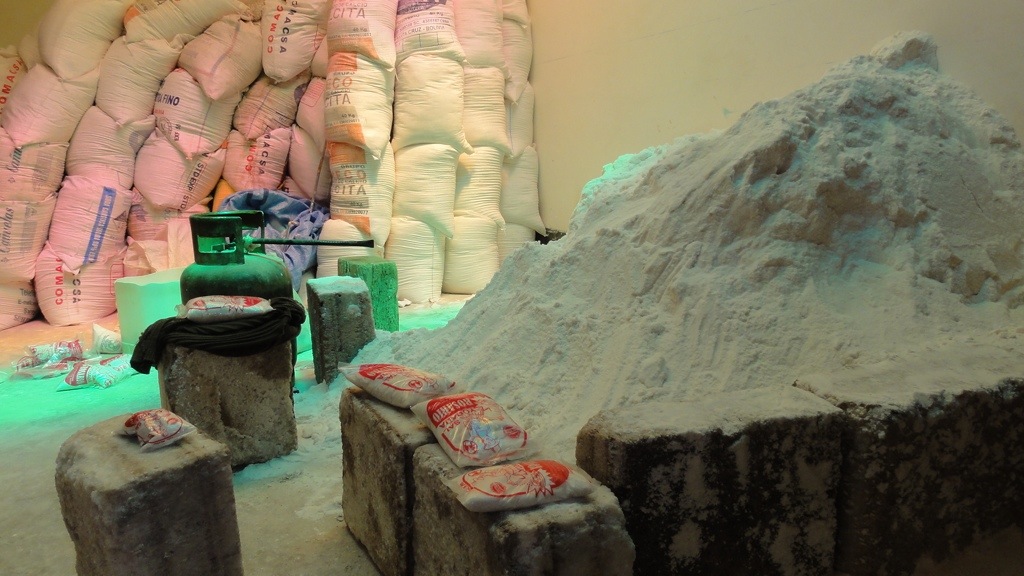
After lunch we drove another hour to the other side of the flats to see salt being farmed by individuals. They mark out a square area of about six metres and scrape the top inch or so up into pyramid which dries out over a day or so. They then carry this back to the small village on the shore of the flats were we saw how its transformed into salt. First completely dried over an oven, them crushed, and then mixed with Iodine and finally bagged. A small half kilo bag is sold for one boliviano, about ten pence. Unbelievable that for all the work, that’s how cheap the salt is. In this small village were also stalls selling all the usual mass produced hats, jumpers, socks etc but they also were making small objects from the salt, like ashtrays or carved lamas. These they could sell for five Bolivianos, so you can understand how important the tourist business is to the communities economy.

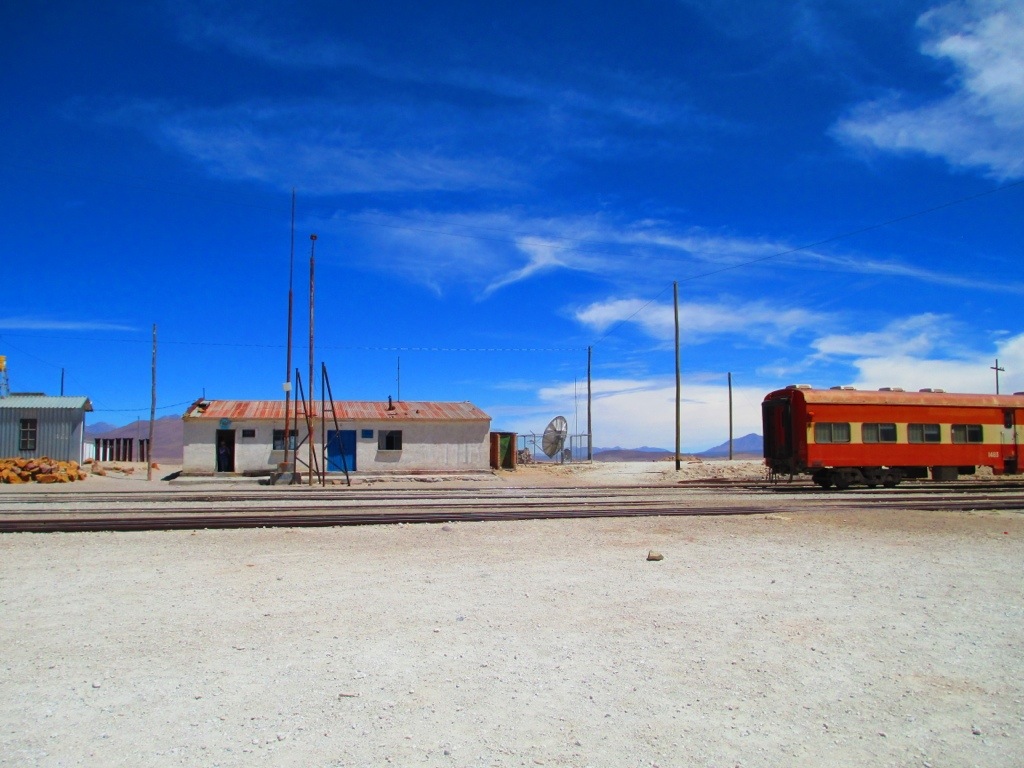
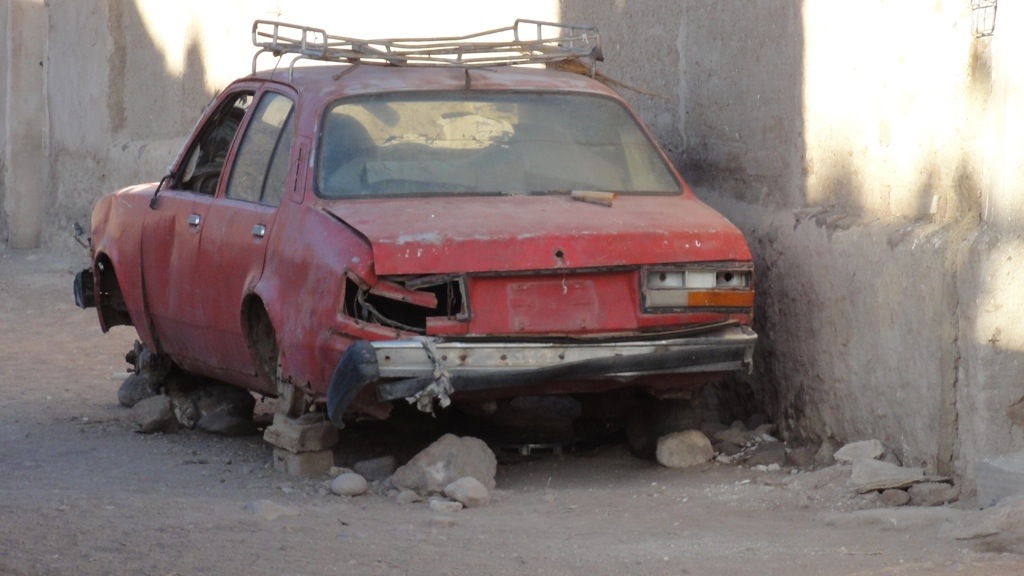
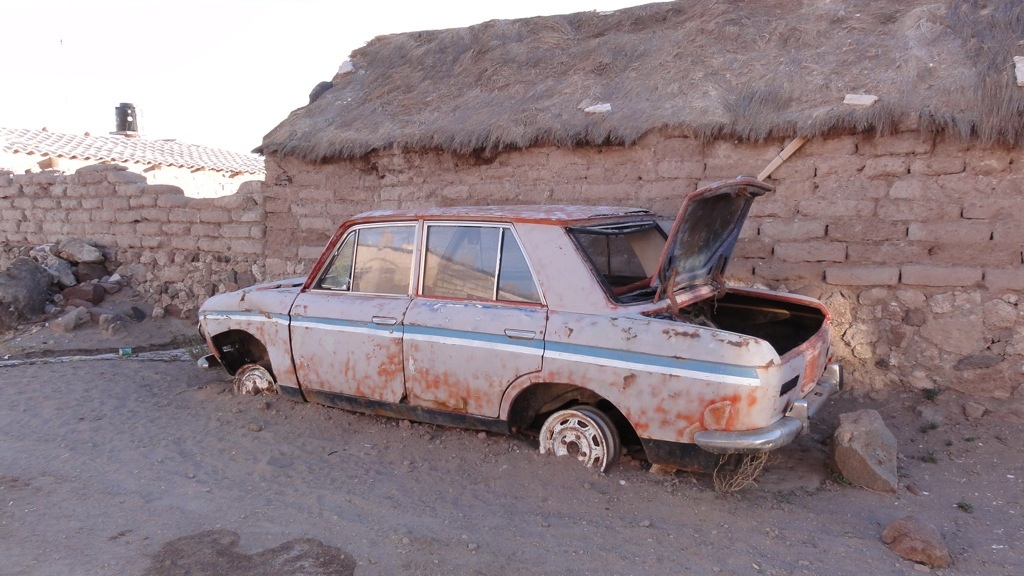
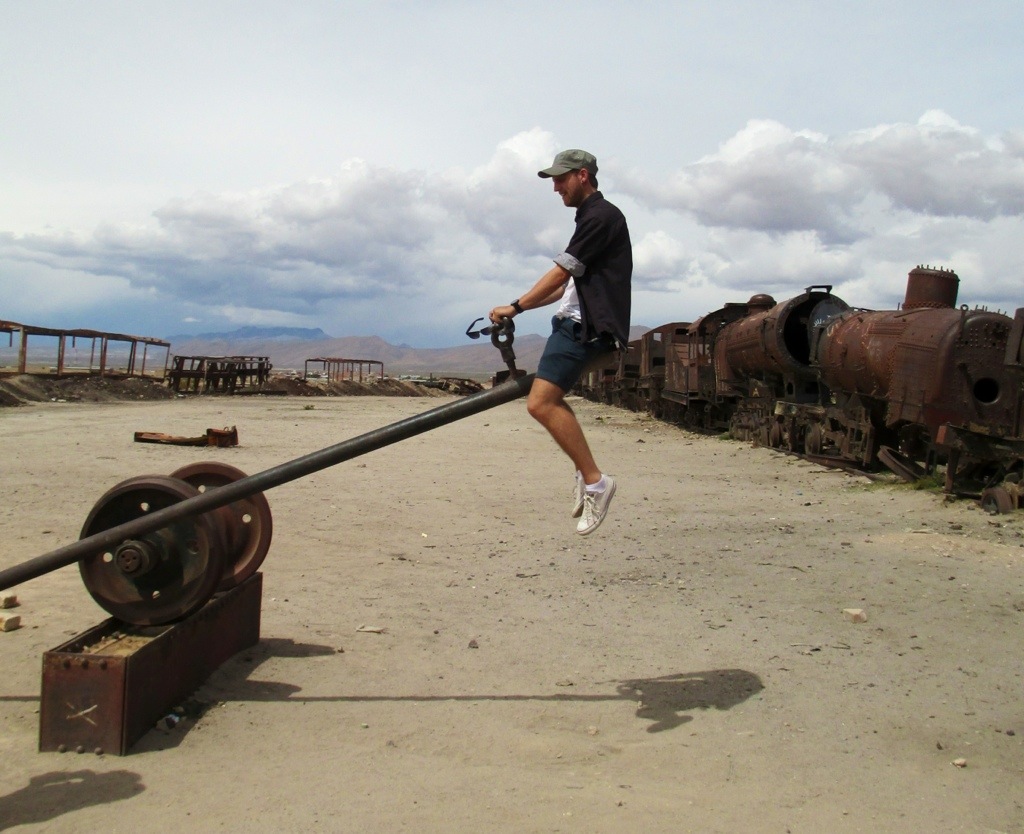
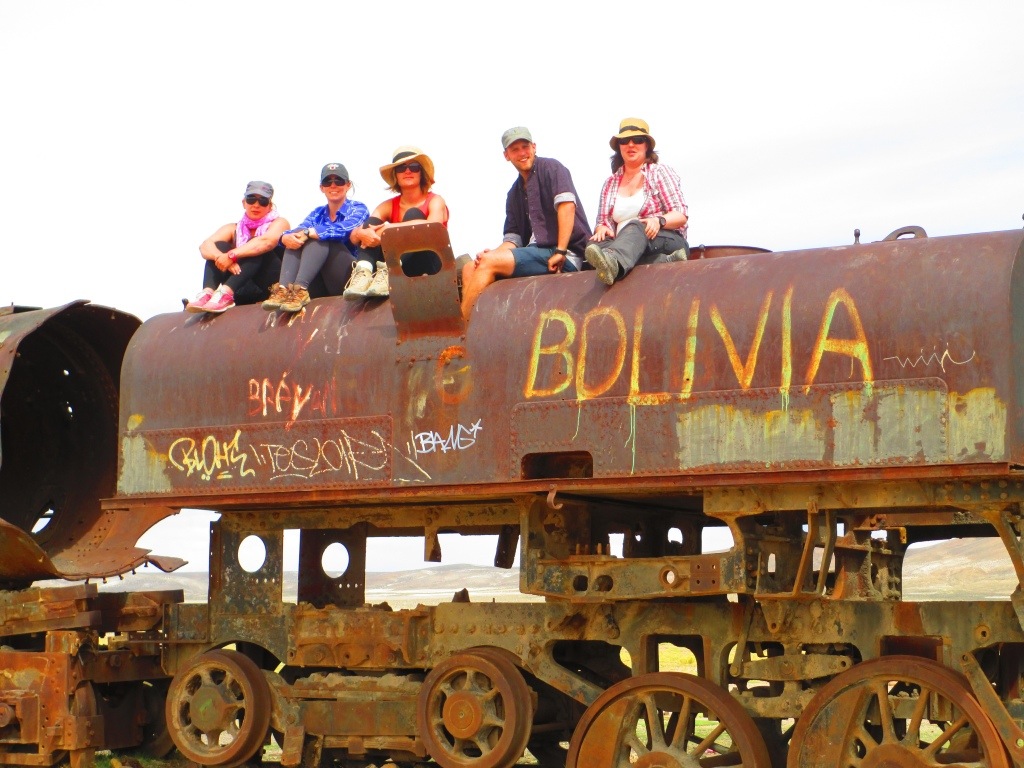
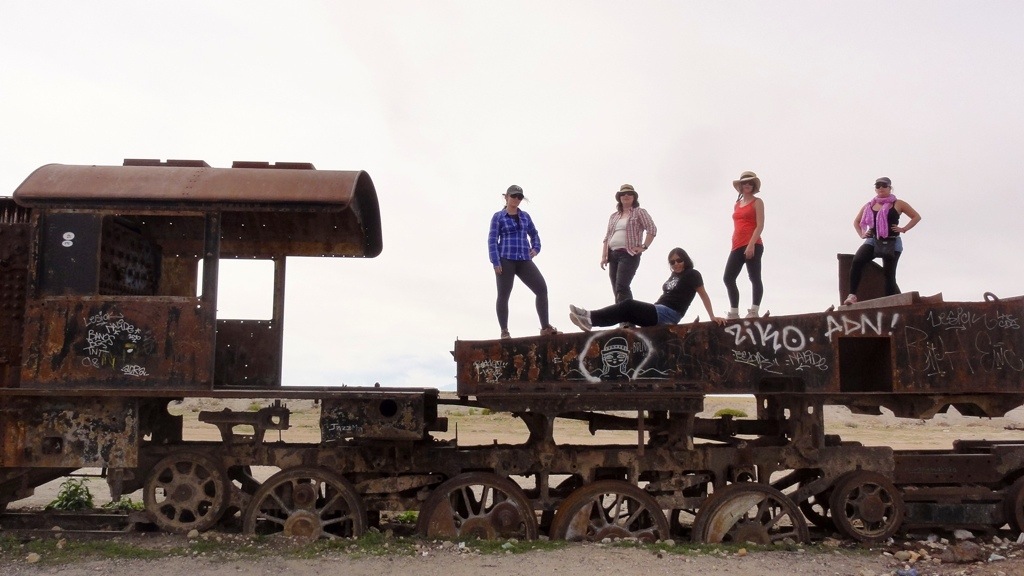
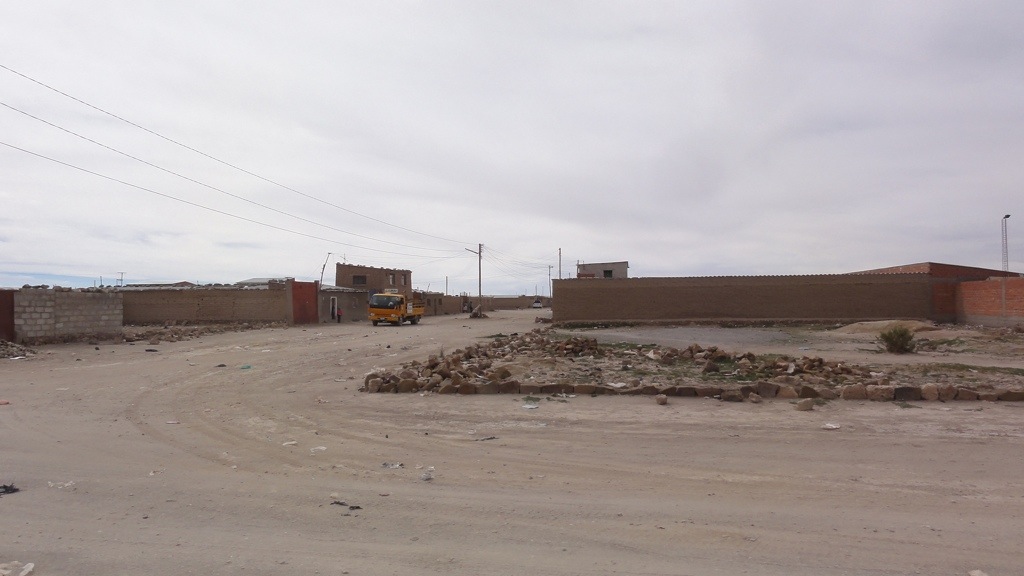
We drove our final hour to the town of Uyuni were we’d be staying the night, but first we passed round the outskirts of the town to a Train graveyard. The outside of the town is fairly depressing, and rubbish blows across the scrub for miles surrounding the town as there is no waste disposal system for the town and everyone just leaves there rubbish for the wind to carry off. Whilst obviously I find this a bit shocking coming from a country were I’d feel guilty dropping a lollipop stick, you just have to acknowledge that they have much bigger problems then waste control or recycling, like running water, electricity or enough food. The train graveyard was full or abandoned trains from the 1950s. All rusted away, but a great photo place, and they have added in some swings and a seesaw to all most make it a playground. Again we could clamber all over the engines and carriages so had a bit of a horse around before heading into the town. We said goodbye and thanks to our two drivers and the cook. We’d been really lucky with the guys and the vehicles as so many others breakdown. This was definitely a plus to having done this particularly trip with a tour so that we had a good good team that my tour company always uses. There are some really shoddy operators with drunk drivers, rubbish vehicles, and dangerous driving and some of the tracks that we were on you definitely needed some experienced drivers for!

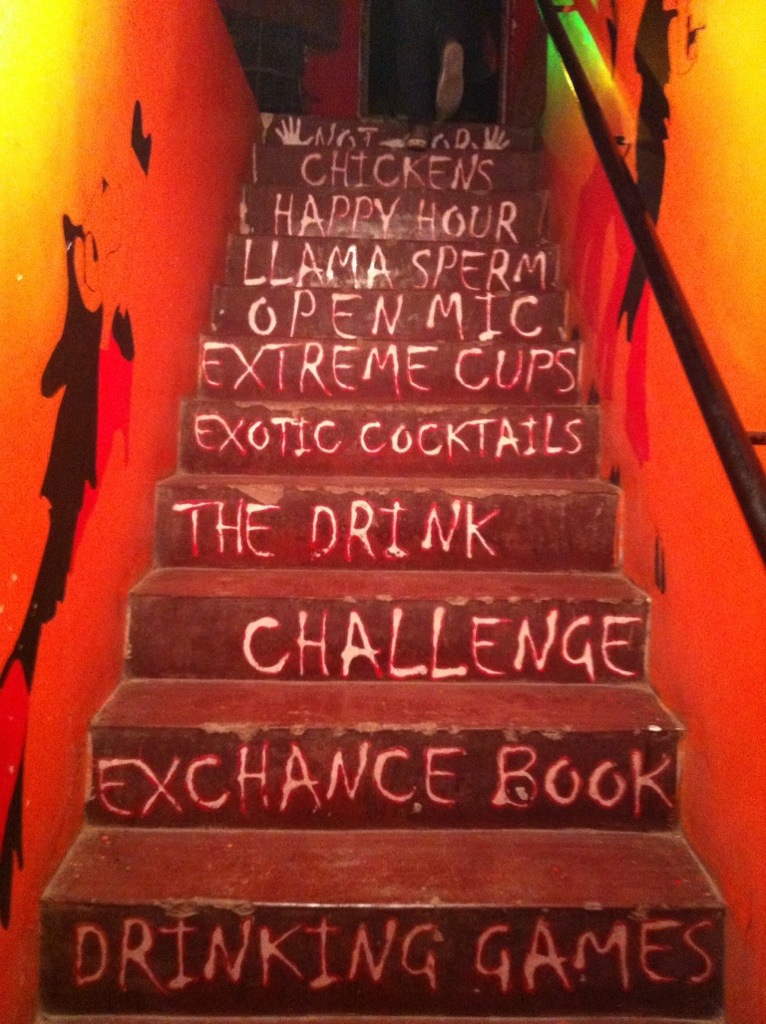
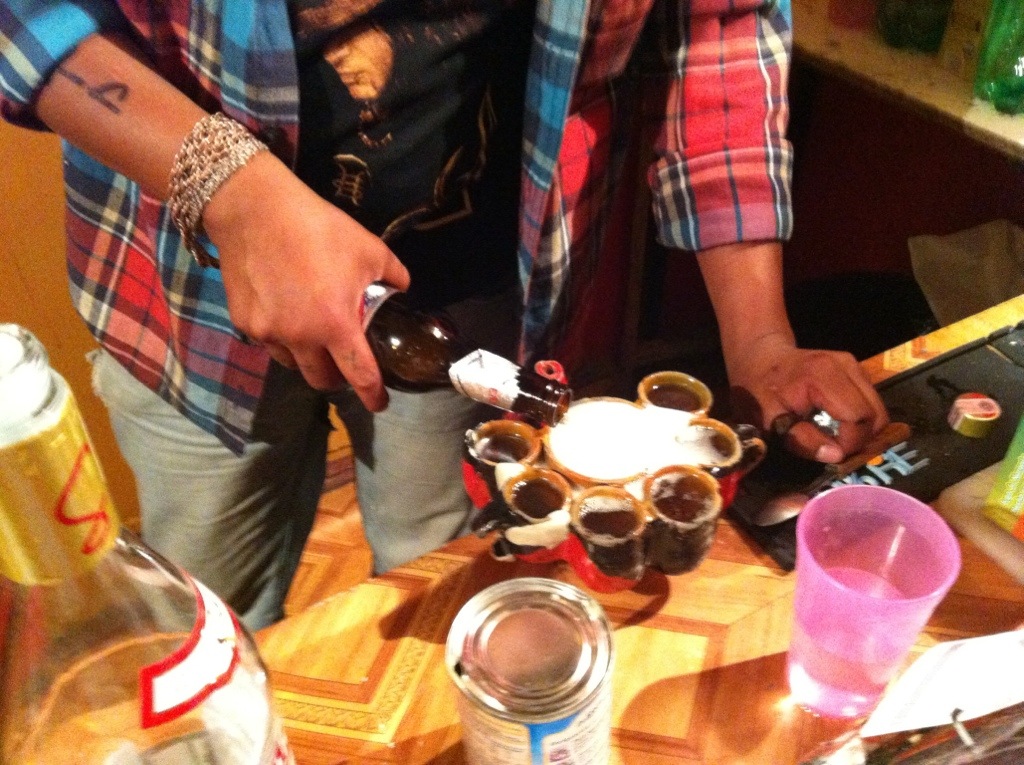
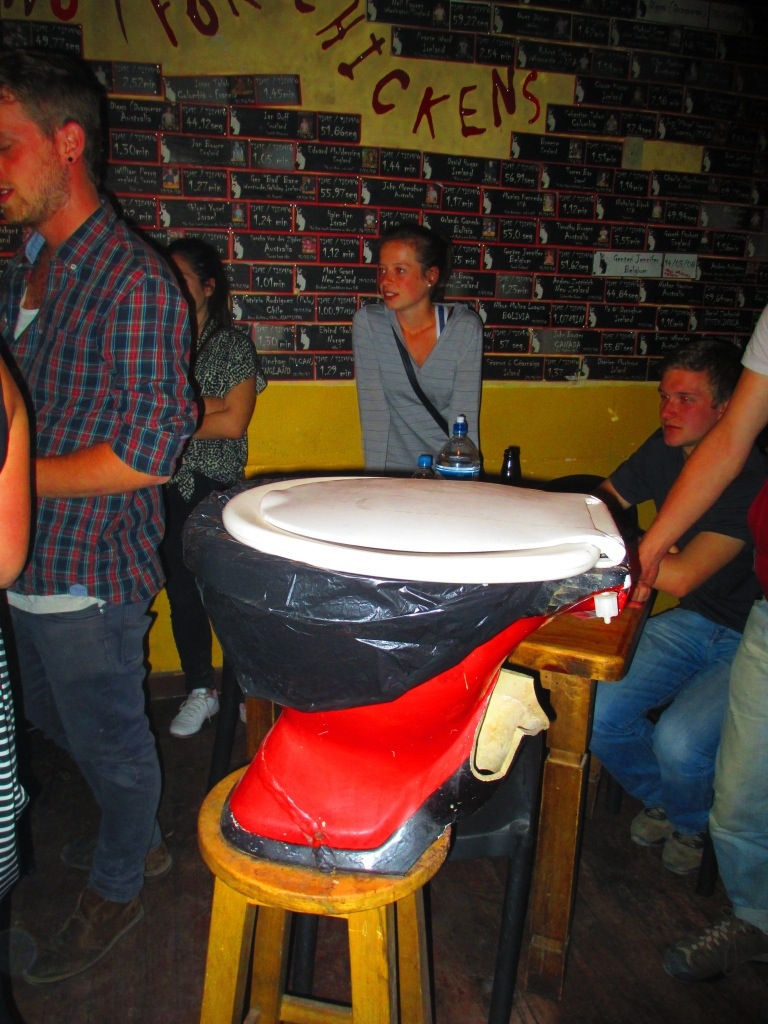
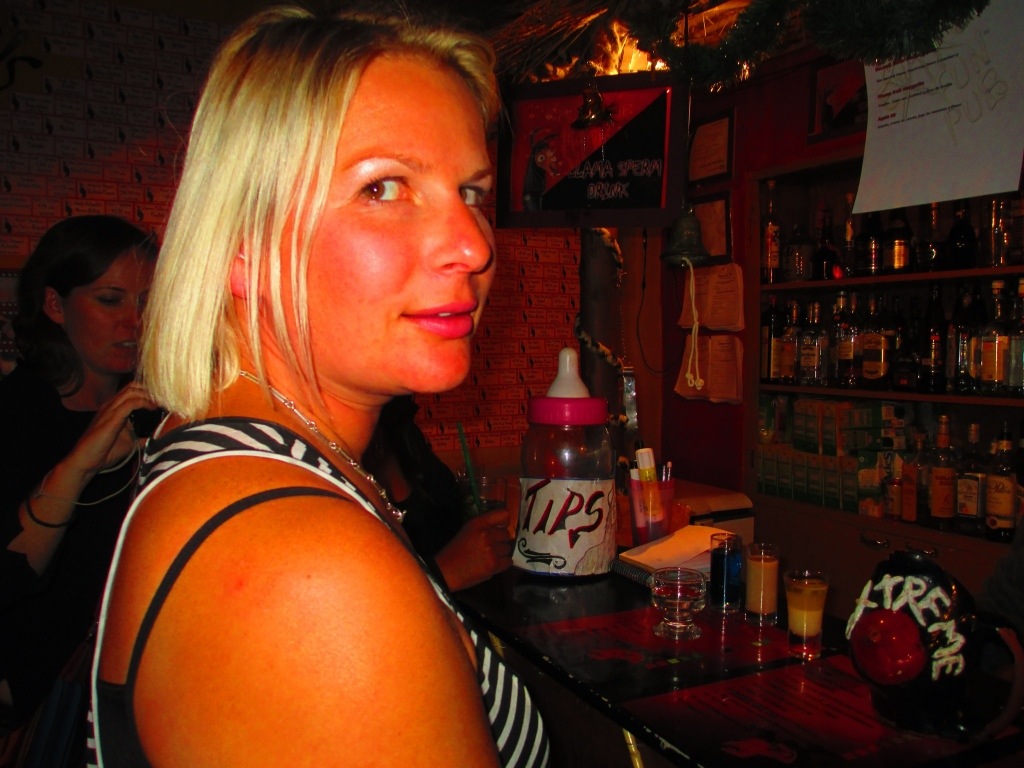
So after two quite basic nights accommodation, we checked into a hotel with hot showers and regrouped clean for dinner. Uyuni itself is (3669m) is a small town whose inhabitants are either involved in the tourist industry or the military. It’s not a beautiful town in anyway, and you would only come through here to cross the salt flats. Another benefit to being part of a tour, was the experience and knowledge of our CEO, so we never had wander around aimlessly trying to decide where to eat, plus she knows which restaurants in Bolivia we’re less likely to get sick from. We had a great meal for about £3 each. After we headed to Uyuni’s main Gringo hangout, the “Extreme Fun Pub”, which after a totally sober NYE we were ready for…and maybe two of us a little to ready. They have a ridiculous drinking challenge of ten different drinks to see how quickly you can drink them, some are basic shots and a couple are are something worse stronger and bigger! You can can part take in the challenge on your own or in pairs, I’m not overly sure how but the Ozzie guy strong armed me into doing it with him, he went first and I went second, our time was not brilliant and my final action was not appreciated by the barman, that’s all I’m saying on here. We all stumbled home relatively early…..

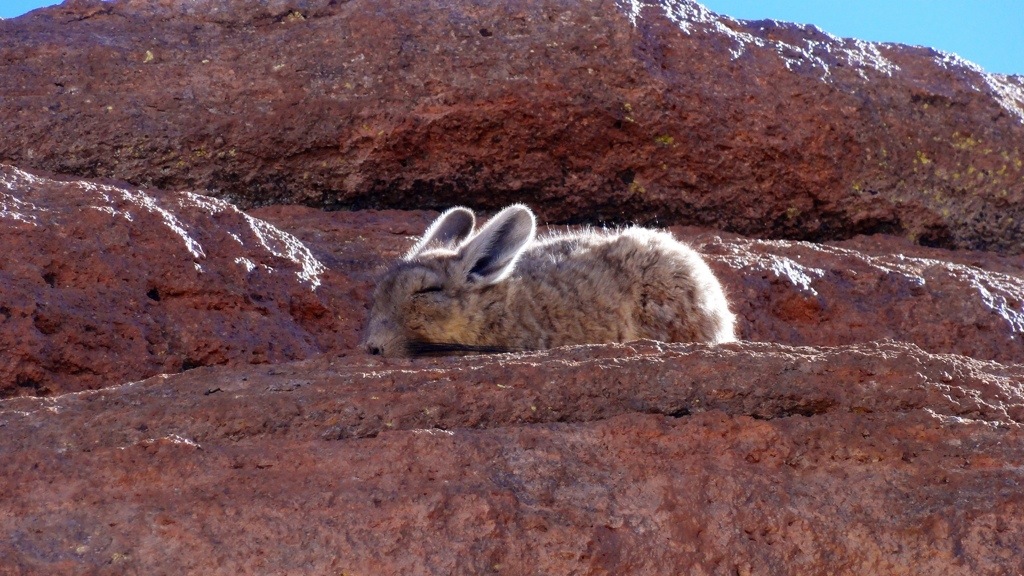
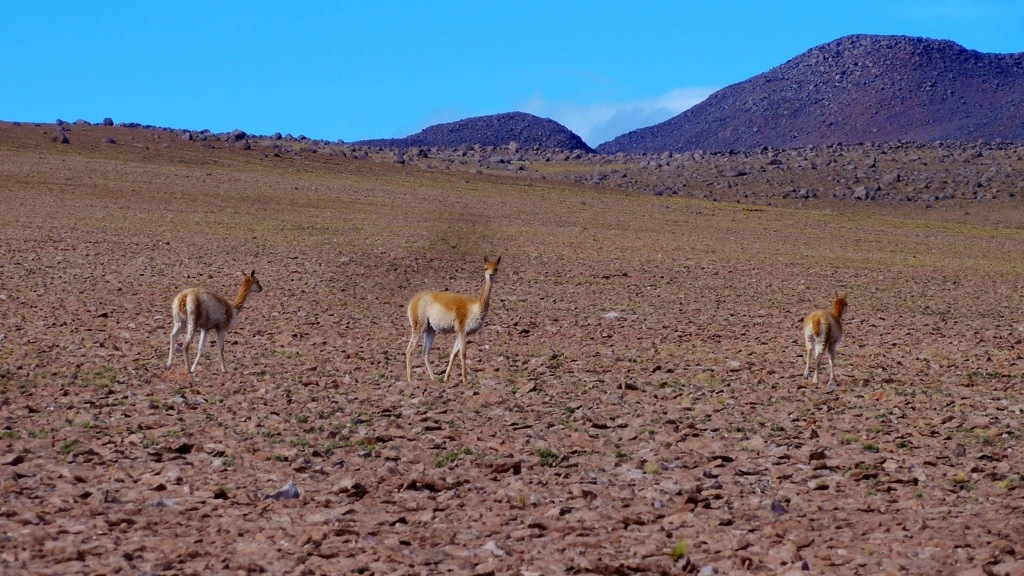
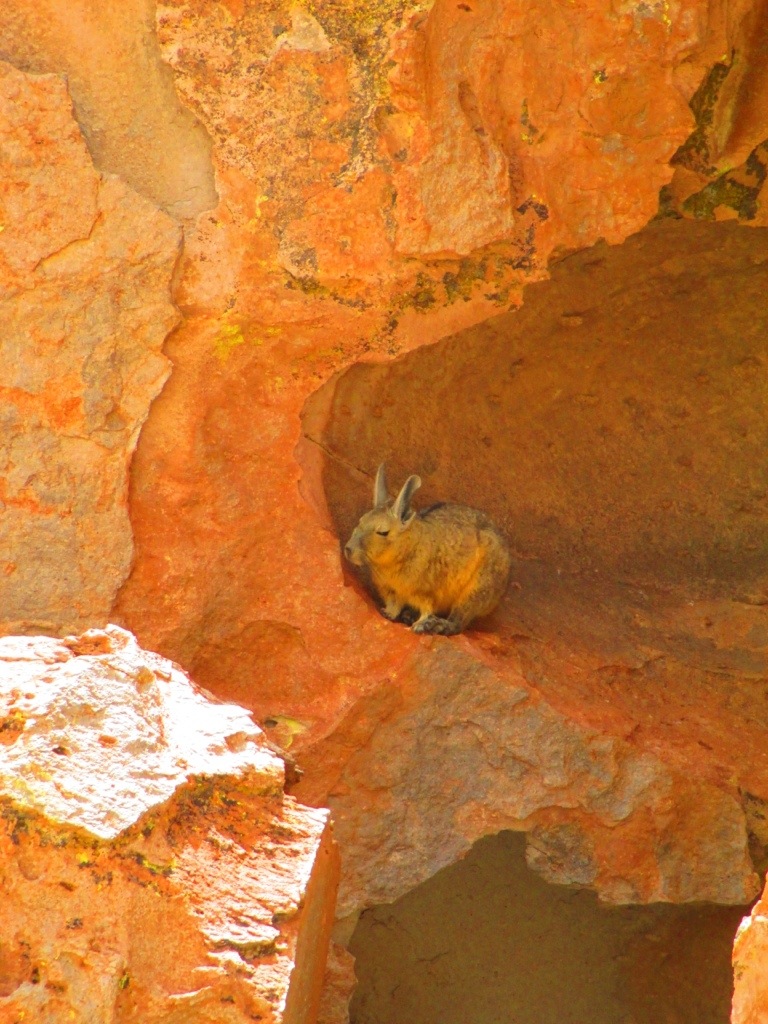
The trip was for me like many others one of the most visually staggering places I’ve been to. Unlike parts of Argentina were you can drive for hours with the landscape barely changing, here in three days we’d seen coloured lakes, flamingoes, arid desert, geysers, quebradas, valleys, canyons, bewildering rock formations , the blinding white of the slat flats, huge Cactus, lamas, Vicunas, Vizcacha (bit like a rabbit). We also experienced the extreme temperatures and the altitude of the desert. I think it’s hard to really appreciate what you are seeing at times, particularly if you are suffering from the altitude, and having the photos to remind me of the trip will be priceless!

20130107-180743.jpg

20130107-180752.jpg

20130107-180801.jpg

20130107-180756.jpg

20130107-180808.jpg

20130107-180821.jpg

20130107-180829.jpg

20130107-180834.jpg

20130107-180840.jpg

20130107-180856.jpg

20130107-180910.jpg

20130107-180917.jpg

20130107-180923.jpg

20130107-180930.jpg

20130107-180939.jpg

20130107-180944.jpg

20130107-180951.jpg

20130107-180956.jpg

20130107-181001.jpg

20130107-181006.jpg

20130107-181023.jpg

20130107-181037.jpg

20130107-181044.jpg

20130107-181051.jpg

20130107-181100.jpg

20130107-181107.jpg

20130107-181113.jpg

20130107-181120.jpg

20130107-181136.jpg

20130107-181146.jpg

20130107-181156.jpg

20130107-181201.jpg

20130107-181211.jpg

20130107-181220.jpg

20130107-181228.jpg

20130107-181236.jpg

20130107-181243.jpg

20130107-181250.jpg

20130107-181255.jpg

20130107-181307.jpg

20130107-181312.jpg

20130107-181322.jpg

20130107-181329.jpg

20130107-181335.jpg

20130107-181344.jpg

20130107-181352.jpg

20130107-181503.jpg

20130107-181518.jpg

20130107-181529.jpg

20130107-181543.jpg

20130107-181557.jpg

20130107-181618.jpg

20130107-181643.jpg

20130107-181652.jpg

La Serena & San Pedro, Chile final stops

We arrived in La Serena mid afternoon following a scenic bus journey six hours north from Santiago along the coast. La Serena is Chile’s second oldest town, built as connection town between Chile and Peru. As a northern coastal town it draws a lot of people in the summer, but is also where a lot of the miners and vineyard workers live from the local valleys. That afternoon we had a few hours free, so went to a “coffee with legs” place. Santiago has many of these places, a concept born in the eighties to make drinking coffee more popular. They are coffee bars with blacked out windows with scantily dressed waitresses. We had meant to check one out in Santiago were they have some pretty well established chains, but they had not been open at Christmas. The one we went to in La Serena was much more like a brothel with coffee definitely being the second thing on the agenda. Tony the only chap in our group had been to one in Santiago and said the places were like chalk and cheese, and the standard of “waitresses” in La Serena definitely quite a bit lower! We drank our very average cappuccinos quickly and got out pretty quick!

After an early supper in one of the fish restaurants on the market plaza we headed out to an observatory up in the mountains. The northern mountain area of Chile is renowned for its amazingly clear skies and has the most powerful telescopes in the world for astronomic research (all though the telescopes are actually owned by the EU, and the states.) We were just at a tourist observatory, and were lucky in one respect with a nearly full moon and cloudless sky, but the same very bright moon then limited the stars we could see. We got to see through the telescope Jupiter, the moon and a nebula (were stars are formed). We were also able to take photos of the moon with our cameras through the telescope. They informed us about the Inca’s interpretation of the stars and how they were used to decide when to plant and harvest. All in all really interesting and I’ve never seen any stars or planets through telescope before so another first!

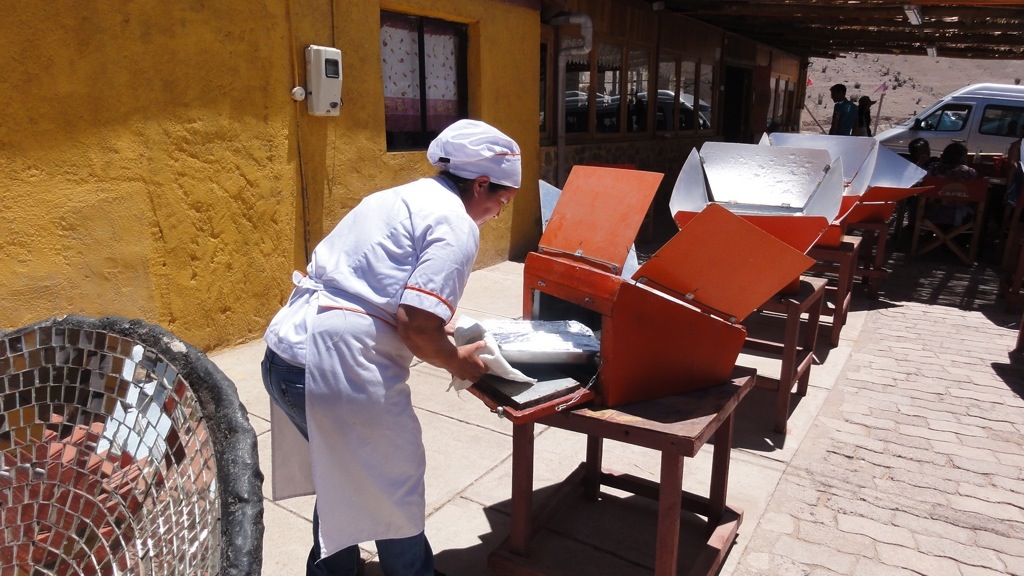
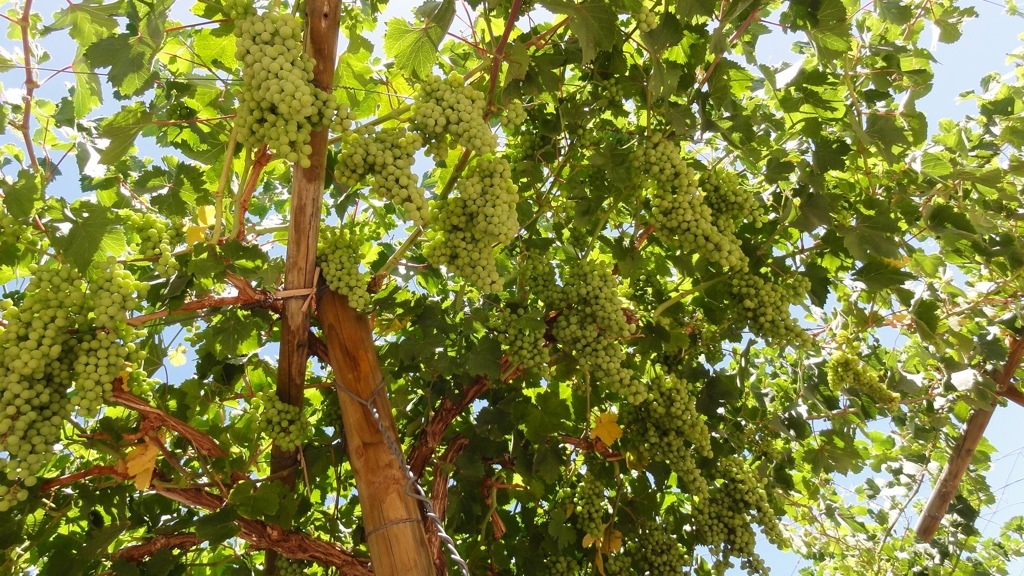
Our second day in La Serena we took a tour to the Elqui Valley, which is the main area Pisco grapes are grown and Pisco is distilled. Pisco is a spirit made from distilling grapes, but tastes nothing like wine. Two of the most popular ways to drink Pisco is either in a Pisco Sour, a cocktail made with sugar, lemon and egg white or Piscola (just with coke). There is an argument between Peru and Chile as to which country really invented Pisco, but the general consensus is Peru! We stopped at a couple of small villages, a vin yard, a huge Pisco cooperative and had lunch at a restaurant which cooked all its food in outdoor solar boxes. It’s a beautiful valley which is lush and green, and then abruptly stops at certain level leaving an arid mountain scape. Two of us bought some decent Pisco, and our plan was when we got back to the hotel was to have a siesta between 7-9pm and then regroup for some drinks and maybe hit the town. The following morning there was vague pretence from a few of us that we came out of rooms to meet everyone but everyone else was asleep. Infact all of us were totally shattered and slept straight through to the following morning, all very rock n roll!

Saturday we had a free day with a late start to get some things done before we headed north into the Atacama desert. A few of us hit the hairdressers, odd items purchased etc. One girl unfortunately had her camera pick pocketed, which was not great of course, but luckily it happened in La Serena and not any further north and she was able to buy a decent replacement. We then took a seventeen hour night bus north to the small town of San Pedro de Atacama arriving at ten the following morning.

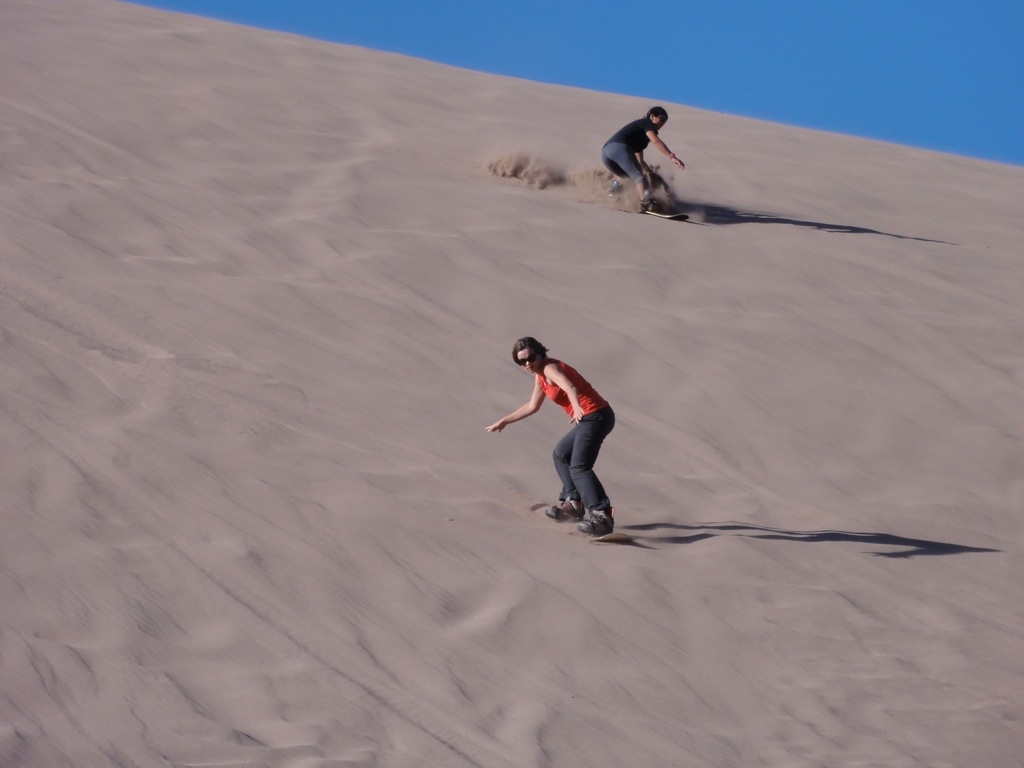
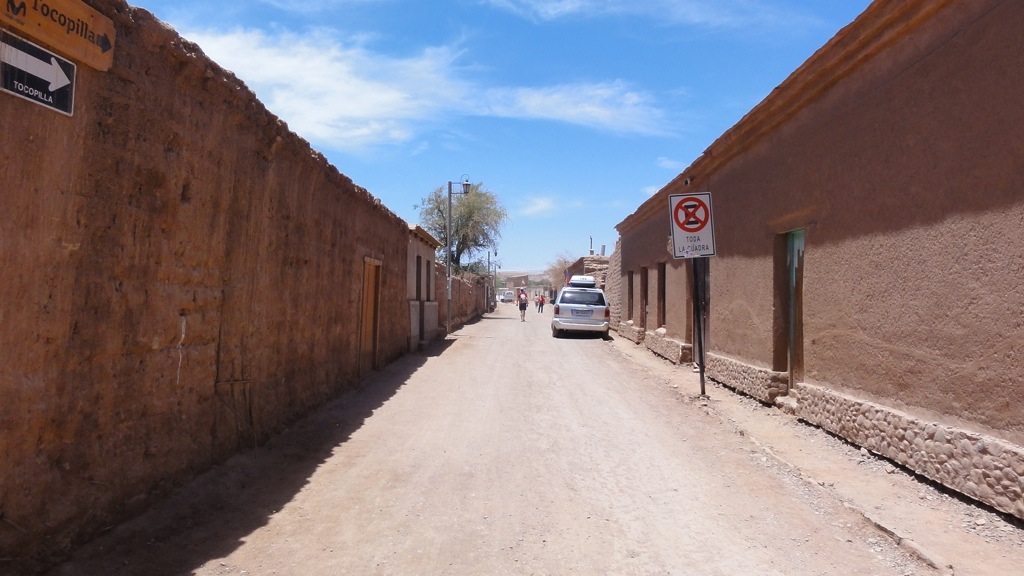
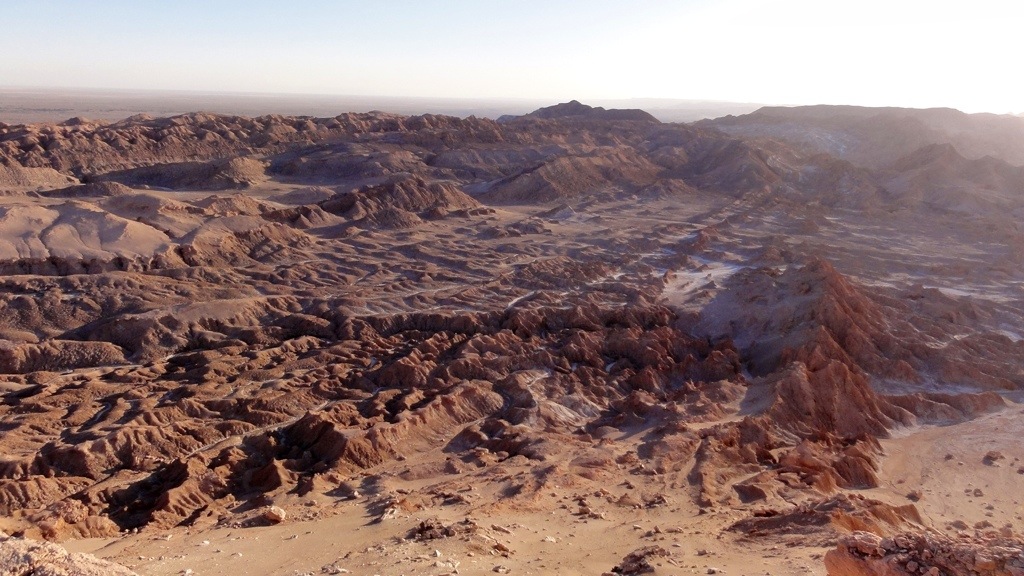
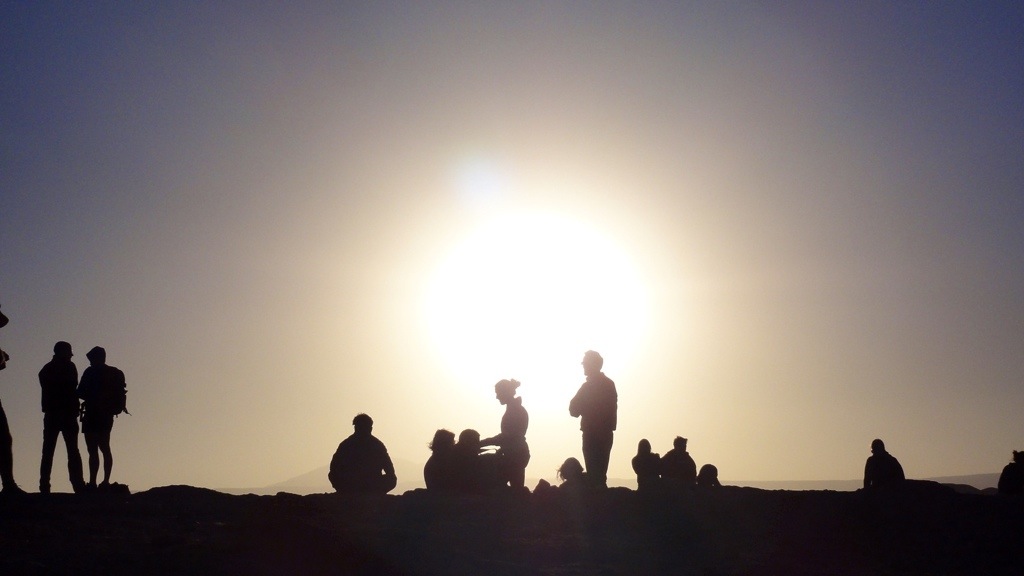
Once merely a stop on the Andean cattle drive, San Pedro de Atacama (2440 metres) is now a small adobe town crammed with hostels, hotels, pricey restaurants, cafes and a zillion tour operators! The surrounding desert area is full of options from Horseriding, mountain biking, trekking and sand boarding. We all went sand boarding in death valley on our first afternoon, and it was AWESOME DUDES! I say that, and yes the sand boarding itself was great, but walking up the sand dunes to the top was an absolute killer in 30+ degrees! The landscape made up for it, and considering it was a first for us all think we did pretty good. We collectively agreed that we don’t particularly enjoy the taste of sand though. We then headed to the “Valley of the moons” to watch the sunset with a Pisco Sour. It was beautiful, but we were far from the only ones there….seemed like half the town was on the cliff with us! We picked up some empanadas for dinner and sank a bottle of the Pisco, mixed with soda, lemonade and fresh limes. We all slept well following the night bus, sand boarding and Pisco!

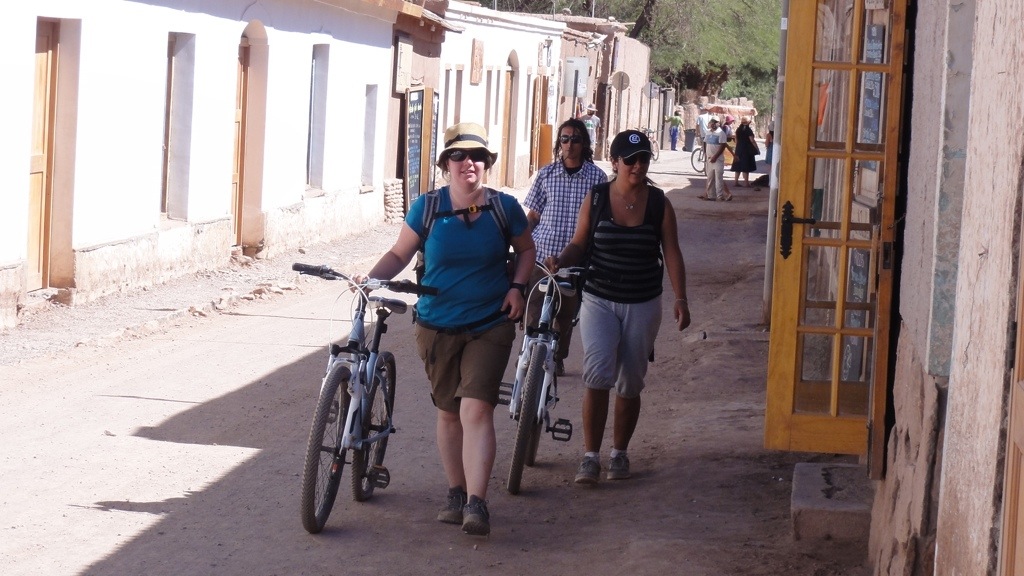
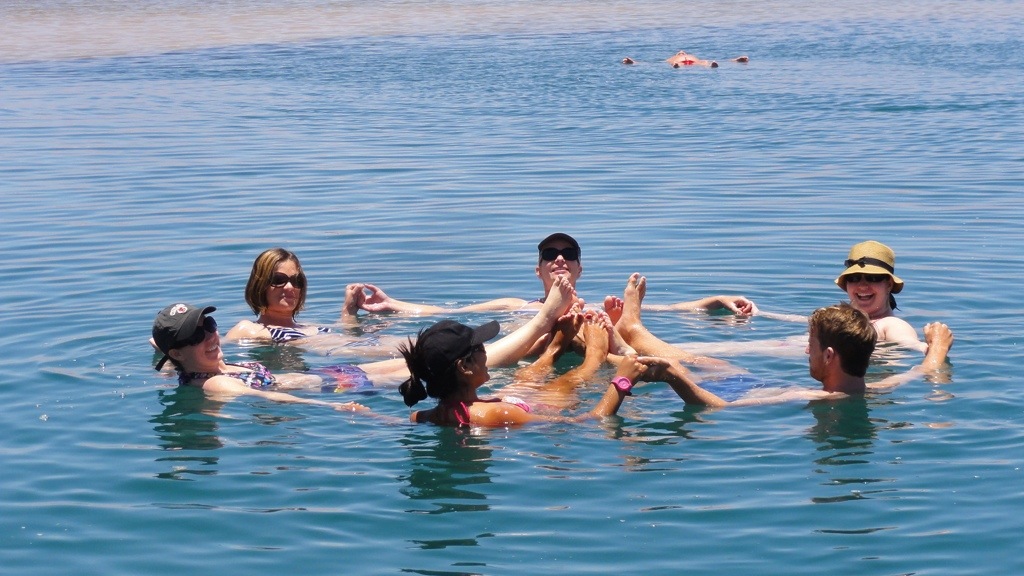
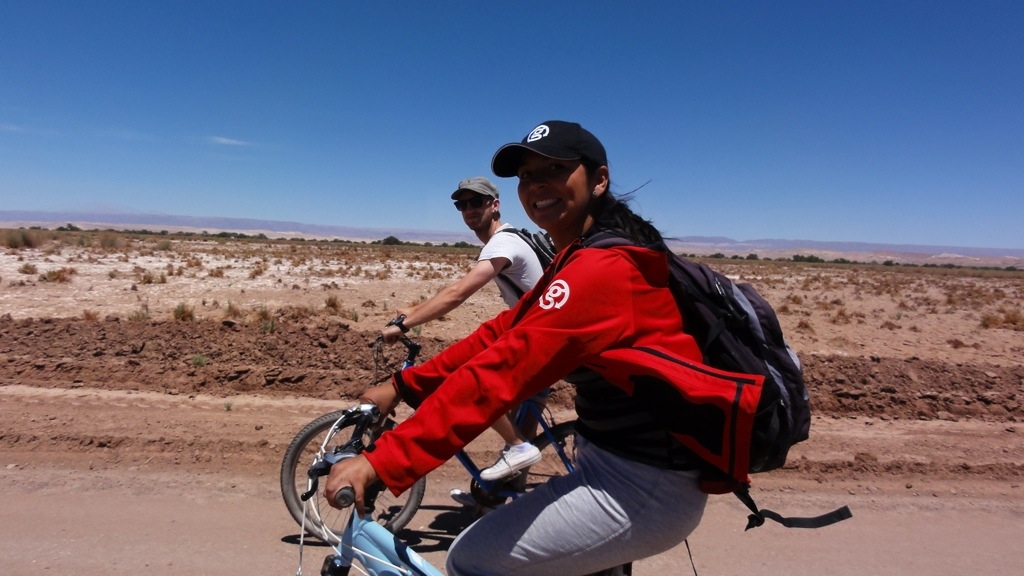
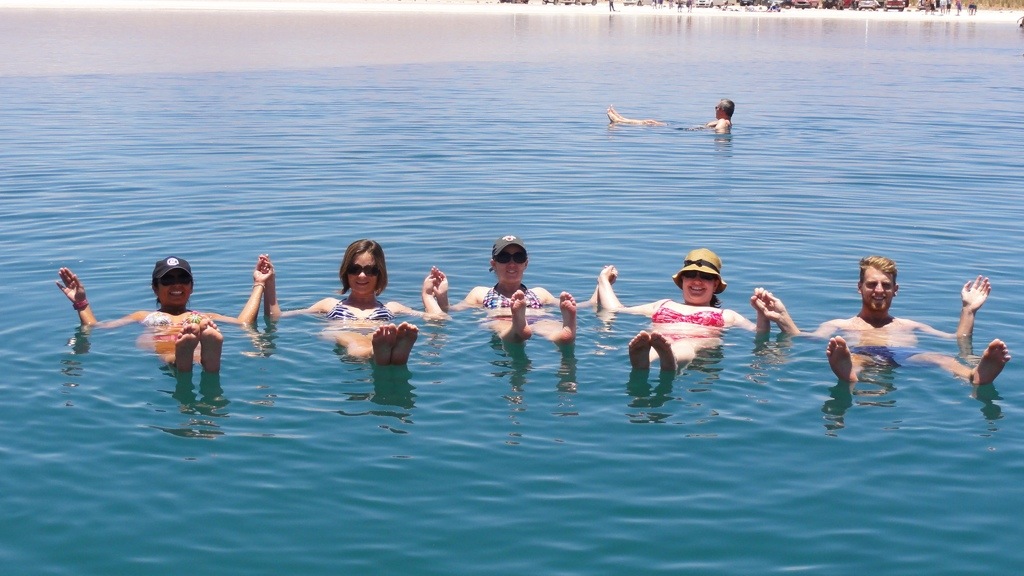
Sunday we hired mountain bikes for a nice easy 20km cycle out to the desert to some salt lakes. It all started off pretty easy until one of our party had a flat! Four of us had cycled off not realising, when we saw our guide and the one girl were no where to be seen we cycled back to find they had successfully changed the tyre and just needed to pump up the new tyre. Fifty minutes later with six of us trying and failing to get the thing inflated we were about to let her walk back to town when another cyclist helped us out with a pump that actually worked and we were back on the road again! We arrived at the lakes, and parked our bikes up at which point I didn’t fully acknowledge a small jagged rock wall, fell and quite badly scraped my leg leaving a nice raw area bleeding. Perfect for getting into 40% salt concentrated water!! owwwwwwwwww!!! The lake was very cool, and it was hilarious trying to swim breast stroke as your feet would keep being floated above the water as you tried to kick, which made for some fairly ungraceful swimming! With my leg stinging just a tad I didn’t stay in for too long. The cycle back in the full heat of the day was really hard work, and seemed twice as far. And the poor girl who’d had a flat on the way got another on the way back two km shy from town!! Luckily we had time for a siesta that evening before heading out for a great dinner and a few bottles of wine in preparation of the following three days desert crossing in 4×4 and some serious altitude!

20130104-214218.jpg

20130104-214307.jpg

20130104-214245.jpg

20130104-214300.jpg

20130104-214325.jpg

20130104-214334.jpg

20130104-214253.jpg

20130104-214343.jpg

20130104-214501.jpg

20130104-214420.jpg

20130104-214236.jpg

20130104-214317.jpg

20130104-214453.jpg

20130104-214427.jpg

20130104-214520.jpg

20130104-214407.jpg

20130104-214513.jpg

20130104-214447.jpg

20130104-214433.jpg

20130104-214441.jpg

20130104-214401.jpg

20130104-214413.jpg

20130104-214231.jpg

20130104-214350.jpg